
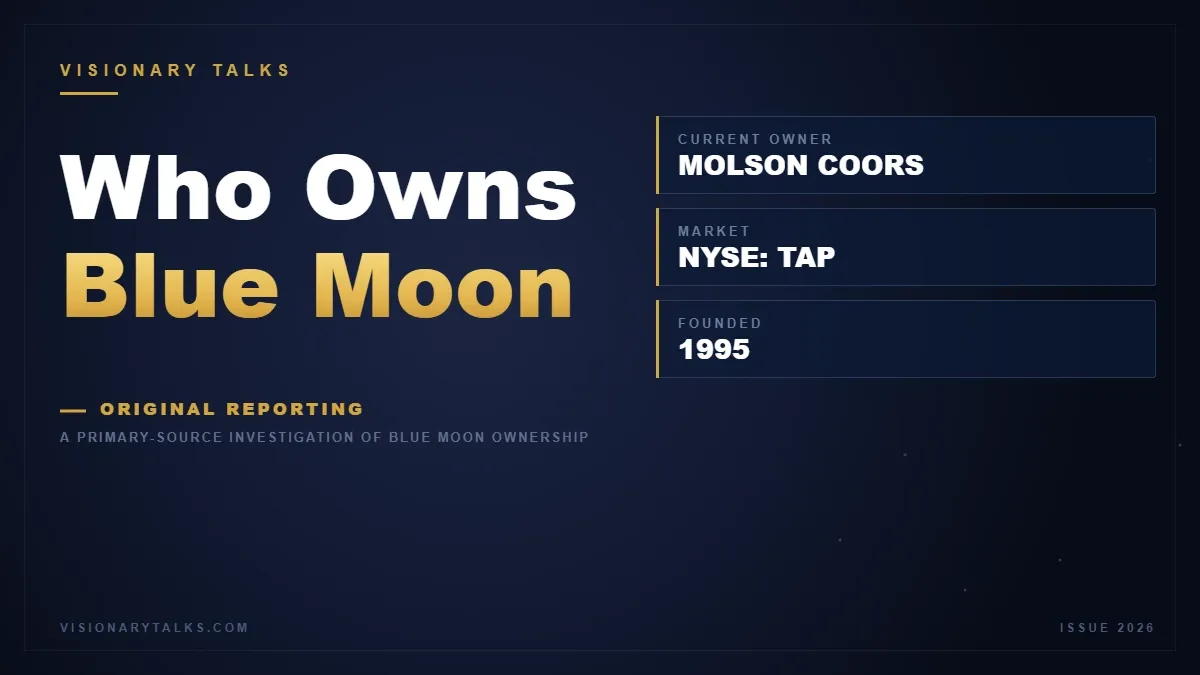
Who Owns Blue Moon Right Now?
The Portfolio Effect: The Big Beer Machine Behind a “Craft” Label
Blue Moon feels like a standalone craft brand. In reality, it is one label inside a portfolio engineered to win shelf space, tap handles, and price tiers.
Here are several well-known brands and portfolio pillars connected to Molson Coors.
| Brand or Portfolio Pillar | Year added to the portfolio | Estimated value or revenue signal |
|---|---|---|
| Blue Moon | 1995 (launched by Coors) | Listed as “Above Premium” in company reporting, which generally signals a higher-margin brand tier |
| Coors Light | 1978 (introduced) | Core “Premium” brand that anchors national scale economics |
| Miller Lite | 1975 (introduced) | Core “Premium” brand and one of the largest light beers in the U.S. |
| Molson Canadian | 1959 (introduced) | Core “Premium” brand in the Canada portfolio |
| Leinenkugel’s | 1988 (acquired by Miller) | “Above Premium” brand family in the Molson Coors portfolio |
| MillerCoors portfolio consolidation | 2008 JV, then 2016 full ownership | 2016 deal valued at about $12B to consolidate the U.S. business and certain global rights |
Important note for accuracy: Molson Coors reporting distinguishes between owned brands and partner brands sold via licensing or distribution agreements. Blue Moon is treated as a primary owned brand.
The Origin Story: How Blue Moon Was Created to Compete With Craft
Blue Moon founders
Blue Moon is not a startup craft brewery with independent founders who later sold out. It was developed inside Coors as an internal innovation project. The origin story most often credits brewer Keith Villa with creating the Belgian-style concept at the Sandlot Brewery at Coors Field.
1995: Coors launches Blue Moon
Blue Moon was launched in 1995 and tied to the Sandlot Brewery at Coors Field in Denver. It is commonly associated with a Belgian-style witbier concept and the brand’s early story emphasizes craft-style cues from the start.
2005: Molson and Coors merge
The Coors-built brand became part of the Molson Coors platform after the 2005 Molson Coors combination.
2008 to 2016: The portfolio becomes a distribution engine
Molson Coors and SABMiller formed MillerCoors in 2008, and Molson Coors later bought SABMiller’s stake in 2016. The practical result was stronger control of the U.S. beer portfolio, distribution leverage, and brand architecture.
The “craft” positioning was challenged publicly
Blue Moon’s craft-style marketing has been debated for years. In 2016, a proposed class action tied to “craft” perception was dismissed. The real takeaway is that the brand was designed to benefit from craft demand without being an independent craft brewery.
The Strategy: Why Blue Moon Exists Inside a Giant Brewery
Blue Moon is a masterclass in portfolio strategy.
This is not vertical integration, it is retail decision control
Molson Coors is not trying to own the entire supply chain like a classic vertical empire. Instead, it aims to own the consumer’s default choices at the point of purchase.
If a drinker wants:
- A light lager: Coors Light or Miller Lite
- A legacy mainstream brand: other Molson Coors portfolio labels
- Something that feels craft-adjacent with a story: Blue Moon
The company can capture the customer across multiple preference paths.
“Craft styling” powered by scale economics
The logic is simple.
Independent craft can win on authenticity. Big Beer wins on distribution, placement, and consistency at volume.
Blue Moon is what happens when you apply national distribution and portfolio power to a product built with craft cues.
Who Owns the Owner? The Inception Layer
Molson Coors is public
Molson Coors Beverage Company is a public company listed on the NYSE under the ticker TAP. Because it is public, ownership flows to its shareholders.
Institutions own large stakes
Like many public consumer companies, major index and asset management firms commonly appear among the top holders, including names such as Vanguard, BlackRock, and State Street.
Governance reflects merger heritage
Molson Coors governance includes legacy control mechanics linked to its merger history, including voting trust arrangements tied to significant Class A holdings. This helps explain how influence can remain concentrated even inside a public company structure.
Key Takeaways for Entrepreneurs
- Positioning can beat provenance. Blue Moon captures craft-style willingness to pay while being backed by Big Beer scale.
- Distribution is a moat. The best product does not always win. The best placed product often does.
- Portfolio strategy catches customers before they leave. Owning multiple default options across price tiers is often more powerful than trying to make one brand fit everyone.