
This ownership matters far more than most customers realize. Caribou looks and feels like a standalone coffee brand, but its capital, strategy, and growth priorities are shaped by a global consumer conglomerate with deep financial resources and a long term horizon.
Who Owns Caribou CoffeeRight Now?
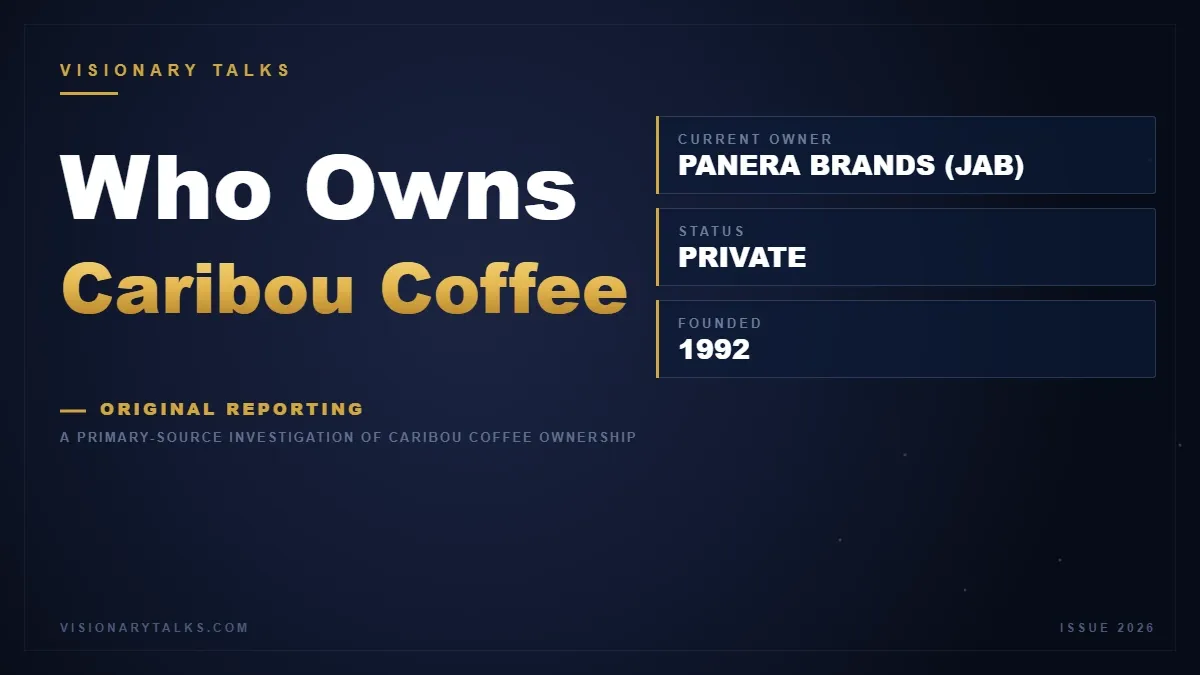
Caribou Coffee operates as a wholly owned subsidiary within Panera Brands, which itself is a private holding company created by JAB to group several fast casual and beverage concepts under one roof. There is no public float, no minority outside shareholders, and no franchise led ownership at the corporate level.
Panera Brands was officially formed in 2021 as part of JAB’s effort to consolidate scale, purchasing power, and digital infrastructure across select restaurant assets. Caribou Coffee was folded into this structure alongside Panera Bread and Einstein Bros. Bagels.
From an ownership standpoint, this means Caribou does not answer to public market investors. Instead, strategic decisions are driven by JAB’s internal capital allocation models and long term brand building philosophy.
Ownership Snapshot
| Entity | Ownership Stake | Notes |
|---|---|---|
| Panera Brands | 100% | Direct owner of Caribou Coffee operations |
| JAB Holding Company | 100% | Ultimate controlling owner via private holding structure |
The Portfolio: The Illusion of Choice
One of JAB’s most effective strategic moves has been creating the perception that each of its brands operates independently. To the consumer, Caribou Coffee feels distinct from a Panera café or an Einstein Bros. Bagels store.
Behind the scenes, however, these brands share real estate analytics, supply chain leverage, digital loyalty technology, and strategic leadership input. The individuality is preserved at the surface level, while efficiencies are harvested centrally.
This is not accidental. JAB uses brand autonomy as a growth tactic while quietly building platform advantages that standalone operators could never match.
Parent Company Brand Portfolio
| Brand | Segment | Positioning |
|---|---|---|
| Caribou Coffee | Specialty coffee | Premium, approachable, Midwest rooted |
| Panera Bread | Fast casual dining | Clean ingredients, daily dining occasions |
| Einstein Bros. Bagels | Quick service breakfast | Bagels and morning convenience |
Founders and Ownership Timeline
To understand how Caribou Coffee ended up inside a European backed holding company, you need to trace its ownership evolution. This is a classic story of regional success meeting institutional capital.
Caribou Coffee Founders
Caribou Coffee was founded in 1992 in Edina, Minnesota by John Puckett. The original vision was to create a welcoming coffeehouse experience with higher quality beans and a community oriented atmosphere.
Puckett led the company through its early expansion across the Midwest, establishing Caribou as a credible alternative to the rapidly scaling Starbucks. The founder era emphasized culture, sustainability, and coffee craftsmanship.
Ownership History Timeline
| Year | Event | Ownership Impact |
|---|---|---|
| 1992 | Caribou Coffee founded | Founder owned private company |
| 2004 | Initial public offering | Public shareholders introduced |
| 2012 | Acquired by JAB Holding | Taken private by JAB |
| 2021 | Formation of Panera Brands | Caribou moved under Panera Brands umbrella |
Current Leadership and CEO
While ownership is centralized, day to day operations at Caribou Coffee are run by an experienced executive team focused on brand specific execution. This separation between ownership and management is deliberate.
JAB prefers to back seasoned operators who understand their customer base, while retaining oversight at the board and capital allocation level.
Leadership Snapshot
| Role | Name | Since |
|---|---|---|
| CEO | John Butcher | 2017 |
Why This Ownership Structure Exists
The Panera Brands structure reflects a platform strategy rather than a traditional restaurant holding company. JAB is not looking for quick exits, it is building enduring consumer brands with repeat purchase economics.
By grouping bagels, broth, bread, and beverages under one corporate umbrella, JAB captures more eating occasions across the day without forcing brand dilution.
The Business Genius
The genius lies in shared infrastructure without shared identity. Caribou can focus on beverage innovation and loyalty, while Panera perfects throughput and menu transparency.
For investors studying this model, the key insight is how private capital can outcompete public markets when operational patience and long term vision align.
The Risk
The primary risk is strategic congestion. Too many brands under one platform can slow decision making or lead to internal competition for capital.
If leadership misjudges consumer shifts or over standardizes experiences, the very independence that makes these brands trusted could erode.
Tracing the Ownership Chain
To fully answer who owns Caribou Coffee, you have to go one level higher than Panera Brands. That trail leads to one of the most powerful consumer investment firms in the world.
JAB Holding Company Sàrl is a privately owned investment firm based in Luxembourg and controlled by the Reimann family. It has built a massive portfolio across coffee, pet care, and consumer staples.
Ownership Layers
| Layer | Owner | Control |
|---|---|---|
| Caribou Coffee | Panera Brands | 100% |
| Panera Brands | JAB Holding Company | 100% |
Because JAB is private, there are no institutional shareholders to list and no quarterly earnings calls to analyze. Control rests with the Reimann family and JAB’s internal investment committee.
This structure gives Caribou insulation from short term market pressures, but it also means strategic pivots happen quietly and decisively.
JAB’s ownership of Panera Brands has been widely reported by major financial news outlets including Reuters, which chronicled the formation of Panera Brands as part of JAB’s restaurant consolidation strategy in coverage of the Panera Brands launch.
Debunking the Common Misconception
The most common misconception about Caribou Coffee is that it is simply a regional competitor to Starbucks. That framing dramatically undersells what the brand actually represents.
Caribou Coffee is not fighting Starbucks on equal public market terms. It is executing a different playbook, backed by private capital that also owns Peet’s Coffee, Panera Bread, and other global consumer brands.
Rather than trying to win the global store count race, Caribou focuses on loyalty density, drive thru optimization, and suburban convenience. Those priorities make far more sense within a Panera Brands ecosystem than in a standalone public company.
Key Takeaways for Entrepreneurs
- Ownership structure shapes strategy, private ownership can unlock patience and operational focus that public markets often penalize.
- Platform models thrive when brands share systems but not identities, preserving customer trust while scaling efficiency.
- Being acquired does not mean disappearing, it can mean gaining leverage if the parent understands your category.
Caribou Coffee’s ownership story is not just about who signs the checks. It is about how capital, control, and consumer brands quietly consolidate power in modern food and beverage.
For founders and operators, the lesson is clear. The most important part of a brand’s future often happens after the acquisition headline fades, when ownership structure starts shaping every strategic decision.
And for investors watching the coffee and restaurant space, Caribou Coffee is a case study in how private capital platforms like Panera Brands are redefining what scale and competition really mean.