
This ownership matters because Dollar Shave Club is no longer managed as a strategic consumer brand inside a multinational conglomerate. It is instead operated as a standalone portfolio company optimized for margin expansion, operational discipline, and an eventual exit.
Who Owns Dollar Shave ClubRight Now?
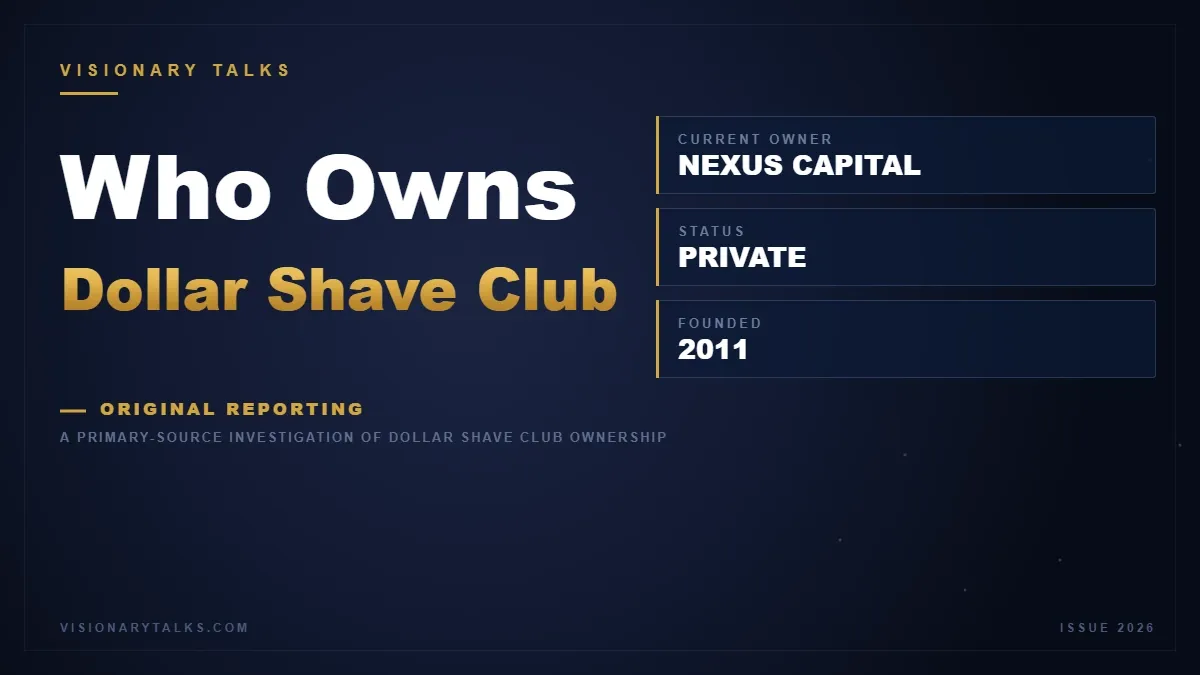
As of 2026, Dollar Shave Club sits inside the Nexus Capital Management portfolio as a privately held operating company. Nexus acquired the brand from Unilever in a carve out transaction that transferred full operational and economic control.
The deal was not a minority investment or strategic partnership. Nexus bought Dollar Shave Club as a platform asset, meaning the firm controls board composition, executive hiring, capital allocation, and long term exit planning.
While financial terms were not publicly disclosed, reporting at the time indicated a significant markdown from the one billion dollar valuation Unilever paid in 2016. That reset is central to understanding how Nexus plans to create value.
Ownership Snapshot
| Entity | Ownership Stake | Notes |
|---|---|---|
| Nexus Capital Management | 100% | Acquired Dollar Shave Club from Unilever in 2023 via private transaction |
The Portfolio: The Illusion of Choice
Private equity ownership often creates the illusion of independence. To consumers, Dollar Shave Club appears unchanged, still quirky, still direct to consumer, still anti incumbents.
Behind the scenes, the brand is now one node in a broader capital allocation strategy. Nexus does not need Dollar Shave Club to win culturally. It needs the business to generate durable cash flow and optionality.
This is a classic PE move. Strip away corporate overhead, refocus the core SKU economics, and rebuild profit discipline that was lost inside a global conglomerate.
Parent Company Brand Portfolio
| Brand | Segment | Positioning |
|---|---|---|
| Dollar Shave Club | Men’s grooming DTC | Value driven subscription brand with mass retail expansion |
| Other Nexus portfolio brands | Consumer and industrial | Operational turnaround and margin focused assets |
Founders and Ownership Timeline
To understand why Dollar Shave Club ended up in private equity hands, you need to revisit its founding story. Few startups better captured the early 2010s shift in consumer buying behavior.
Dollar Shave Club Founders
Dollar Shave Club was founded in 2011 by Michael Dubin and Mark Levine. Dubin served as the public face of the company, while Levine brought early operational and financing expertise.
The company broke into the mainstream with a viral launch video that skewered Big Razor and positioned Dollar Shave Club as a smarter, cheaper alternative. That identity powered explosive early growth.
From day one, this was a venture backed business built for scale and acquisition. The founders optimized for distribution leverage, not for remaining independent indefinitely.
Ownership History Timeline
| Year | Event | Ownership Impact |
|---|---|---|
| 2011 | Dollar Shave Club founded | Founder owned with venture capital backing |
| 2016 | Acquired by Unilever for about one billion dollars | Unilever gains 100 percent ownership |
| 2023 | Unilever sells Dollar Shave Club to Nexus Capital | Nexus assumes full private ownership |
Current Leadership and CEO
Following the sale to Nexus, Dollar Shave Club transitioned to a leadership model typical of private equity owned consumer brands. The focus shifted from brand voice to unit economics and cash generation.
Day to day operations are overseen by an executive team accountable directly to the Nexus deal partners. Strategic decisions now ladder up to fund level objectives.
Leadership Snapshot
| Role | Name | Since |
|---|---|---|
| CEO | Jason Kim | 2023 |
Why This Ownership Structure Exists
This is a textbook conglomerate reversal. Unilever was an operating scale conglomerate built for distribution, compliance, and brand risk management.
Nexus is a financial sponsor built for focus. Removing Dollar Shave Club from Unilever allows tighter cost controls and faster decision making.
The Business Genius
Dollar Shave Club generates predictable subscription cash flow, has strong brand recall, and operates in a consumables category with repeat purchase behavior.
For private equity, that combination is gold. It supports leverage, operational optimization, and multiple exit paths including resale or recapitalization.
Nexus did not buy hype. It bought an asset with proven demand and underexploited profitability.
The Risk
The risk is brand erosion. Aggressive cost cutting can undermine product quality, marketing creativity, or customer loyalty.
Another risk is category pressure. Grooming subscriptions are no longer novel, and customer acquisition costs have risen significantly since the company’s early days.
Tracing the Ownership Chain
Dollar Shave Club no longer sits inside a public company reporting structure. Ownership now flows upward into private investment funds with limited transparency.
That changes incentives. Decisions are evaluated through the lens of fund returns, holding period, and exit multiples.
Ownership Layers
| Layer | Owner | Control |
|---|---|---|
| Dollar Shave Club | Nexus Capital affiliate | 100% |
| Nexus Capital affiliate | Nexus Capital Management funds | General partner control |
Nexus Capital itself is privately owned by its partners. There are no public shareholders and no institutional ownership disclosures like those found in SEC filings.
You can confirm the sale and ownership change through reporting by Reuters, which covered Unilever’s divestment strategy in detail. See Reuters reporting on Unilever selling Dollar Shave Club to Nexus Capital for transaction context.
Debunking the Common Misconception
Dollar Shave Club is not owned by Unilever. That belief is outdated and persistent because of how influential the 2016 acquisition was.
Unilever exited the asset completely in 2023. The brand is no longer part of Unilever’s personal care reporting or strategic roadmap.
This divestment aligned with Unilever’s broader effort to shed slower growth or non core brands, as disclosed in its investor communications and strategic updates.
Key Takeaways for Entrepreneurs
- Exits reset narratives. Being acquired by a global giant does not mean permanent safety or ownership stability.
- Private equity ownership changes incentives fast. Profit discipline becomes the primary strategy.
- Brand strength can survive ownership changes, but only if operational decisions protect customer trust.
Dollar Shave Club’s journey is not a failure story. It is a capital lifecycle story.
Venture scale led to a strategic acquisition. Strategic ownership led to stagnation. Private equity ownership now aims to engineer a second act.
For founders and operators watching from the sidelines, the lesson is simple. Ownership shapes destiny, sometimes more than product or marketing ever will.
As of 2026, that destiny sits firmly in the hands of Nexus Capital Management.