
This ownership matters because Instant Pot is often mistaken for either a standalone brand or a once public consumer electronics success story. In reality, it is a cornerstone asset inside a private equity owned house of legacy kitchen brands, shaped by restructuring economics, not gadget innovation alone.
Who Owns Instant PotRight Now?
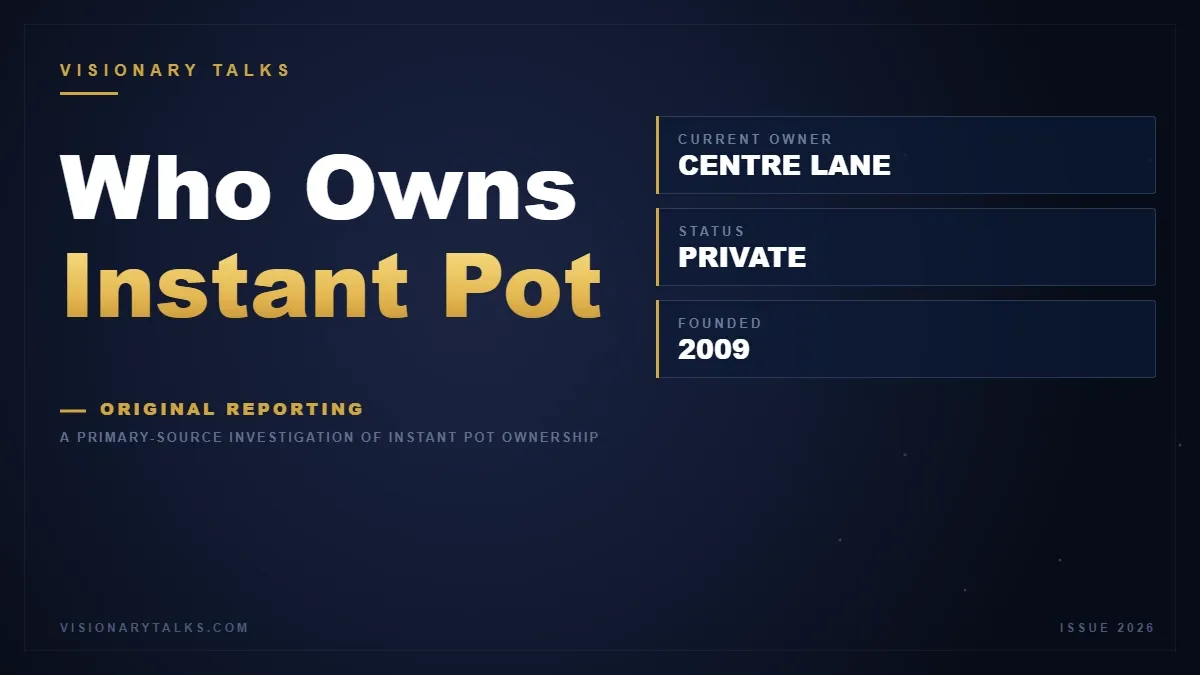
As of 2026, Instant Pot sits inside Instant Brands, which is fully owned by Centre Lane Partners following the company’s Chapter 11 bankruptcy exit. The transaction transferred ownership from a distressed, over leveraged operating company to a private equity firm specializing in complex carveouts and turnarounds.
Centre Lane acquired Instant Brands through a debt for equity transaction approved by the US Bankruptcy Court, wiping out previous equity holders and installing a new ownership and governance structure. Instant Pot, as the most valuable brand inside the group, became one of Centre Lane’s flagship consumer assets.
This means there are no public shareholders, no ticker symbol, and no retail ownership exposure. Control flows directly from Centre Lane’s investment vehicles to the board of Instant Brands and down to brand level operating teams.
Ownership Snapshot
| Entity | Ownership Stake | Notes |
|---|---|---|
| Centre Lane Partners affiliates | 100% | Acquired Instant Brands via Chapter 11 sale in 2024 |
| Instant Brands | 100% | Parent company of Instant Pot and related kitchen brands |
The Portfolio: The Illusion of Choice
Instant Pot feels like a category unto itself, but inside Instant Brands it functions as one hero SKU among a portfolio of heritage names. This structure creates the illusion of market fragmentation while consolidating purchasing power, distribution leverage, and operational control.
From the consumer’s perspective, these brands compete on shelves and marketplaces. From the owner’s perspective, they are coordinated to maximize margin, negotiate with retailers, and amortize marketing and supply chain costs.
Parent Company Brand Portfolio
| Brand | Segment | Positioning |
|---|---|---|
| Instant Pot | Electric cooking appliances | Modern, convenience focused, digitally native |
| Pyrex | Glass food storage | Mass market heritage kitchen staple |
| Corelle | Dinnerware | Durability and everyday use |
| CorningWare | Bakeware | Trusted legacy cookware brand |
| Snapware | Food storage | Organization and meal prep |
| Chicago Cutlery | Kitchen knives | Value oriented knife sets |
Founders and Ownership Timeline
Instant Pot did not begin as a conglomerate product. It began as a bootstrapped engineering driven startup, built by immigrants solving a personal pain point in their own kitchens.
Instant Pot Founders
The brand was founded in 2009 by Robert Wang, Yi Qin, Robert Jun, and Ming Ni under the original company name Double Insight Inc. Wang, a former software executive, envisioned a single programmable appliance that could replace multiple countertop devices.
The founders relied heavily on Amazon reviews, word of mouth, and online communities rather than traditional retail advertising. This direct relationship with early users created a cult like following that private equity owners would later seek to monetize and scale.
Ownership History Timeline
| Year | Event | Ownership Impact |
|---|---|---|
| 2009 | Double Insight Inc founded | Founder owned and operated |
| 2015 | Instant Pot brand explodes in popularity | Founders retain control during growth |
| 2019 | Merger with Corelle Brands | Creation of Instant Brands holding company |
| 2023 | Instant Brands files for Chapter 11 | Equity effectively impaired |
| 2024 | Centre Lane Partners acquisition | 100 percent ownership transfers to PE firm |
Current Leadership and CEO
Post bankruptcy, Centre Lane replaced the prior board and reshaped the executive leadership to focus on cash flow discipline rather than growth at all costs. Day to day operations are managed by executives accountable directly to the private equity sponsor.
The leadership mandate is clear, stabilize the brands, protect the core Instant Pot franchise, and extract operational efficiencies across the portfolio.
Leadership Snapshot
| Role | Name | Since |
|---|---|---|
| CEO | Appointed executive under Centre Lane oversight | 2024 |
| Board Control | Centre Lane Partners | 2024 |
Why This Ownership Structure Exists
The structure surrounding Instant Pot is classic private equity turnaround logic. Centre Lane acquired a distressed but valuable portfolio at a steep discount, removed unsustainable debt, and centralized control to restore profitability.
This is not a venture model focused on moonshots. It is a consolidation and cash flow recovery strategy built around resilient consumer demand.
The Business Genius
Instant Pot generates predictable demand even in down markets because it replaces multiple appliances and aligns with home cooking trends. By housing it inside a broader kitchen portfolio, Centre Lane can spread overhead and negotiate better terms with manufacturers and retailers.
Private ownership also allows decisive moves that public markets often punish, such as SKU rationalization, marketing pullbacks, and supply chain restructuring.
The Risk
The risk is brand dilution and innovation stagnation. Instant Pot’s early success came from obsessive user focus and rapid iteration, traits that can erode under financial engineering pressure.
If cost cutting overtakes product development, competitors can re enter the category with smarter, more connected devices while Instant Pot defends legacy margins.
Tracing the Ownership Chain
To understand who truly controls Instant Pot, you have to move one level above the brand and even above the operating company. This is where many observers stop too early.
The answer is not a consumer goods company or a public market. It is a private equity fund with defined return horizons and investor mandates.
Ownership Layers
| Layer | Owner | Control |
|---|---|---|
| Instant Pot | Instant Brands | 100% |
| Instant Brands | Centre Lane Partners affiliates | 100% |
Centre Lane Partners itself is privately held and controlled by its managing partners. There is no public disclosure of limited partners, but control rests with the firm’s investment committee.
Debunking the Common Misconception
A persistent misconception is that Instant Pot is either an independent company or a public consumer electronics brand. Neither is true.
Instant Pot has no public listing and no autonomous ownership. Strategic decisions, capital allocation, and leadership appointments are governed by Centre Lane Partners, not by founders or public shareholders.
Key Takeaways for Entrepreneurs
- Even iconic consumer brands can lose independence through mergers and leverage, so capital structure discipline matters as much as growth.
- Private equity ownership can rescue valuable brands, but it rewrites priorities from innovation first to cash flow first.
- Brand equity is an asset class, treat it as such when negotiating acquisitions or investment terms.
As an investigative business journalist, I see Instant Pot as a case study in modern brand capitalism. A beloved product born from founder obsession now lives inside a financial structure optimized for resilience and return.
The brand is not dead, but it is no longer steering its own ship. For investors, operators, and founders, Instant Pot is a reminder that ownership, not popularity, determines a company’s future.
For confirmation of the bankruptcy sale and acquisition terms, see the reporting by Reuters on Centre Lane Partners’ purchase of Instant Brands. Additional background on the company’s portfolio is available via Instant Brands corporate disclosures.