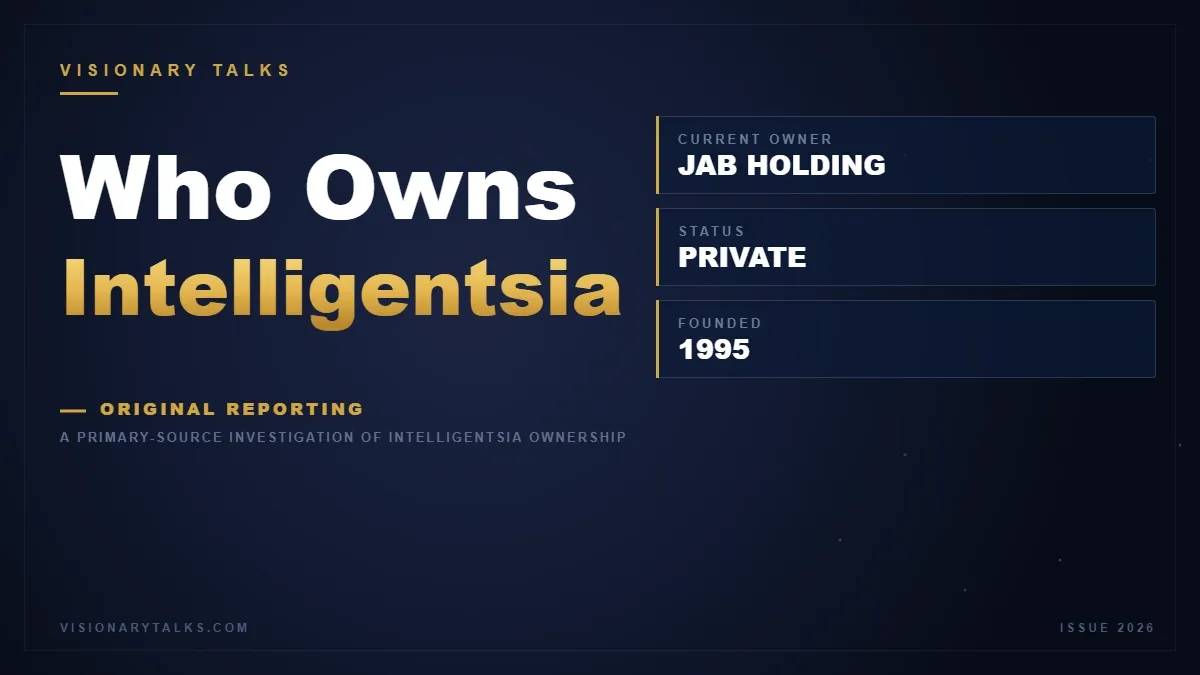
Intelligentsia Coffee is owned 100 percent by
Peet’s Coffee, which itself is owned by the privately held JAB Holding Company, as of 2026. The once independent third-wave coffee pioneer is now firmly embedded inside one of the largest global coffee portfolios in the world. There is no minority stake, employee ownership block, or public float remaining.
This ownership matters because Intelligentsia’s brand still signals craft, independence, and counterculture to consumers. For investors and operators, however, the reality is a tightly integrated asset inside a global beverage empire. Understanding who controls capital, strategy, and distribution explains nearly every major decision the company makes today.
Who Owns Intelligentsia Right Now?
Intelligentsia operates as a wholly owned subsidiary of Peet’s Coffee. Peet’s was acquired by JAB Holding Company in 2012 and has since served as JAB’s premium coffee platform in the United States. Intelligentsia has no separate board with independent control.
From a legal and financial standpoint, Intelligentsia’s profits, losses, and long term strategy roll directly into Peet’s. Peet’s then reports consolidated results upward into JAB’s private holding structure. While the Intelligentsia name remains intact, ownership does not sit with founders or employees.
Ownership Snapshot
| Entity |
Ownership Stake |
Notes |
| Peet’s Coffee |
100% |
Acquired Intelligentsia in 2015 |
| JAB Holding Company |
100% of Peet’s |
Private investment firm controlling coffee assets |
The Portfolio: The Illusion of Choice
JAB’s strategy relies heavily on preserving brand identity after acquisition. Consumers are encouraged to believe they are choosing between distinct philosophies and cultures. In reality, many of these brands are governed by the same capital allocator.
Intelligentsia sits alongside mass premium, specialty, and heritage brands that serve different customer psychographics. This segmentation allows JAB to dominate shelf space, retail locations, and distribution channels without collapsing brand equity.
Parent Company Brand Portfolio
| Brand |
Segment |
Positioning |
| Peet’s Coffee |
Premium Retail |
Dark roast, loyalist consumer base |
| Intelligentsia |
Specialty Coffee |
Third-wave craft narrative |
| Stumptown Coffee |
Specialty Coffee |
Youth driven, lifestyle branding |
| Caribou Coffee |
Mass Premium |
Convenience focused café chain |
Founders and Ownership Timeline
Intelligentsia’s founding story is essential to understanding why the brand carries so much symbolic weight today. The values established in its early years laid the groundwork for its acquisition appeal.
Intelligentsia Founders
Intelligentsia was founded in 1995 in Chicago by Doug Zell and Emily Mange. Zell acted as the public face and evangelist, while Mange focused on operations and culture. Their goal was to elevate coffee to the level of wine through sourcing transparency and craftsmanship.
For nearly two decades, Intelligentsia scaled carefully, prioritizing wholesale partnerships and flagship cafés in major cities. This disciplined growth made it attractive to acquirers seeking authenticity without operational chaos.
Ownership History Timeline
| Year |
Event |
Ownership Impact |
| 1995 |
Company founded |
Founder owned and controlled |
| 2010 |
Minority investment |
Early institutional influence introduced |
| 2015 |
Acquired by Peet’s Coffee |
Full sale of equity |
| 2015 to 2026 |
Owned by JAB via Peet’s |
No founder ownership remaining |
Current Leadership and CEO
Today, Intelligentsia is managed by leadership appointed within the Peet’s organizational structure. Strategic autonomy exists at the brand level, but capital decisions and long term planning are centralized.
Leadership continuity has focused on protecting sourcing standards and retail experience while aligning with parent company efficiency goals.
Leadership Snapshot
| Role |
Name |
Since |
| CEO |
James McLaughlin |
2023 |
| Founder Emeritus |
Doug Zell |
1995 |
Why This Ownership Structure Exists
This is not a venture capital bet or a short term private equity flip. JAB operates as a long horizon holding company focused on everyday consumption categories with recurring revenue.
Coffee fits perfectly into this model. High frequency, brand loyalty, and emotional attachment create durable cash flows that compound quietly over time.
The Business Genius
JAB allows Intelligentsia to retain its voice while plugging into global scale sourcing, logistics, and real estate expertise. This preserves pricing power without requiring constant reinvention.
From an investor perspective, this structure reduces risk while extracting long term value from brands consumers trust deeply.
The Risk
The primary risk is brand dilution through subtle standardization. Cost optimization pressures can conflict with handcrafted narratives.
If too much operational discipline shows up in the cup or café experience, the very premium that justified acquisition begins to erode.
Tracing the Ownership Chain
To understand who ultimately pulls the strings, you have to move up one more level. JAB Holding Company is controlled by the Reimann family of Germany, one of Europe’s wealthiest dynasties.
JAB rarely appears in day to day news, but it quietly controls a dominant share of global coffee and beverage consumption.
Ownership Layers
| Layer |
Owner |
Control |
| Intelligentsia |
Peet’s Coffee |
100% |
| Peet’s Coffee |
JAB Holding Company |
100% |
Because JAB is private, there are no public institutional shareholders to analyze. Control rests with the Reimann family and their appointed investment managers.
For broader context on JAB’s consumer holdings, Reuters has chronicled its expansion into coffee and beverages in detail at
Reuters coverage of JAB’s global coffee portfolio.
Debunking the Common Misconception
The most persistent misconception is that Intelligentsia remains an independent third-wave coffee company. This belief is understandable, but it is factually incorrect.
While product standards remain high, ownership independence ended in 2015. Intelligentsia is a legacy brand operating within a corporate structure that optimizes scale, margin, and portfolio strategy.
Key Takeaways for Entrepreneurs
- Brand independence can be preserved aesthetically even when ownership is fully consolidated.
- Strategic acquirers value culture as much as cash flow when building consumer portfolios.
- Exiting to a long term holding company changes growth incentives more than public markets do.
Intelligentsia’s journey is a case study in how counterculture becomes institutionalized. The coffee still tastes intentional, but the ownership is anything but small. For founders and operators, the lesson is clear: narratives sell products, but ownership dictates outcomes.