
This ownership matters because The Body Shop is a rare case of a globally recognized consumer brand being rescued from near collapse rather than quietly liquidated. For investors and operators, the acquisition sheds light on how distressed legacy brands can be revived, repositioned, and potentially rebuilt under private ownership. It also signals a shift away from ESG driven conglomerate ownership toward tighter, operator led control.
Who Owns The Body ShopRight Now?
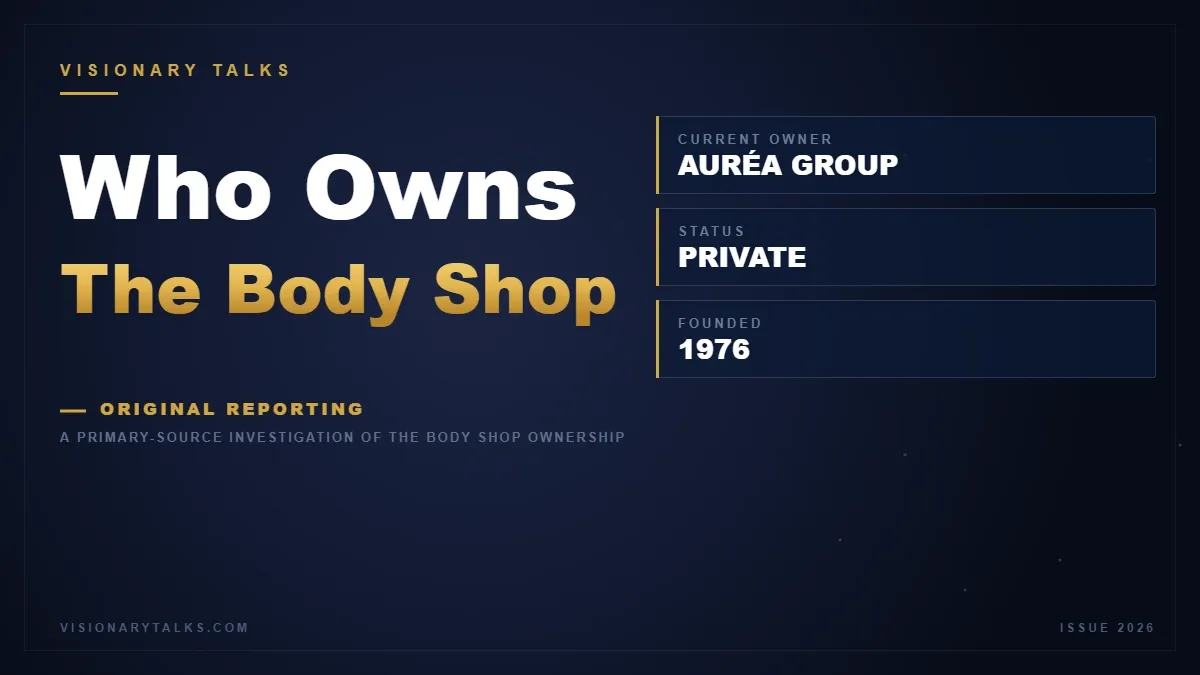
Today, The Body Shop sits entirely inside Auréa Group, a private investment firm with interests across beauty, retail, wellness, and consumer goods. The group acquired The Body Shop directly out of administration in September 2024, taking full ownership rather than a minority or joint venture stake.
The acquisition followed several turbulent years under previous owner Natura & Co, including store closures, declining margins, and an unsustainable cost structure. Auréa Group positioned itself not as a passive financial buyer but as an active brand rebuilder.
Ownership Snapshot
| Entity | Ownership Stake | Notes |
|---|---|---|
| Auréa Group | 100% | Acquired The Body Shop out of administration in September 2024 |
The Portfolio: The Illusion of Choice
One of the most fascinating aspects of Auréa Group’s strategy is how it allows brands to appear independent while consolidating operational control behind the scenes. Consumers still experience The Body Shop as a values driven, ethical beauty brand, but capital decisions now flow through a single ownership lens.
This illusion of choice is not accidental. It allows Auréa Group to extract synergies in supply chain, real estate, and digital commerce without diluting brand identity.
Parent Company Brand Portfolio
| Brand | Segment | Positioning |
|---|---|---|
| The Body Shop | Beauty and personal care | Ethical, heritage, mass premium |
| Revive Collagen | Wellness and supplements | Direct to consumer, performance health |
| McQueens Flowers | Luxury retail | High end experiential gifting |
Founders and Ownership Timeline
To understand how radical this ownership shift is, you need to go back to The Body Shop’s origin story. Few global brands were as closely tied to their founder’s personal philosophy as this one.
The Body Shop Founders
The Body Shop was founded in 1976 by Anita Roddick in Brighton, England. Roddick built the company on principles of ethical sourcing, environmental activism, and community trade long before ESG became a boardroom acronym.
She retained significant influence until the company’s sale in 2006, and her values were heavily marketed even after she exited ownership. That legacy would later become both a brand asset and a strategic constraint.
Ownership History Timeline
| Year | Event | Ownership Impact |
|---|---|---|
| 1976 | Company founded by Anita Roddick | Founder controlled private ownership |
| 2006 | Acquired by L’Oréal | Sold for approximately £652 million |
| 2017 | Sold to Natura & Co | Natura acquired 100 percent from L’Oréal |
| 2024 | Entered administration and sold to Auréa Group | Full ownership transferred to private investors |
Current Leadership and CEO
Ownership change alone does not save a brand. Leadership execution is what determines whether revival is real or cosmetic.
Following the acquisition, Auréa Group moved quickly to restructure governance and operational leadership, emphasizing profitability alongside brand values.
Leadership Snapshot
| Role | Name | Since |
|---|---|---|
| Chief Executive Officer | Charles Denton | 2024 |
| Executive Chair | Mike Jatania | 2024 |
Why This Ownership Structure Exists
The Body Shop’s current structure reflects a classic private capital turnaround model rather than a conglomerate expansion. This was not about adding another logo to a portfolio. It was about acquiring a distressed but globally recognized asset at a reset valuation.
Auréa Group operates more like an operator investor than a passive private equity firm. Control allows faster decisions around store closures, franchising, pricing, and digital investment.
The Business Genius
The strategic brilliance lies in separating brand equity from legacy cost structures. Auréa Group did not buy The Body Shop for its footprint. It bought it for its name recognition, customer data, and global licensing potential.
Under private ownership, politically sensitive decisions can be made quietly, something that was far harder under a public ESG focused parent.
The Risk
The risk is cultural erosion. The Body Shop’s brand power has always rested on credibility, not just marketing language.
If financial optimization undermines ethical sourcing or community commitments, consumers will notice quickly, and trust will evaporate faster than profits appear.
Tracing the Ownership Chain
Because Auréa Group is privately held, there are no public filings detailing institutional shareholders or float percentages. Control is centralized among its founders and private capital partners.
This simplicity stands in sharp contrast to The Body Shop’s previous position inside a public, multi brand corporation.
Ownership Layers
| Layer | Owner | Control |
|---|---|---|
| The Body Shop | Auréa Group | 100% |
| Auréa Group | Private shareholders and founders | Majority controlled |
The acquisition and administration process was widely covered by international business media, including Reuters, which detailed how Auréa Group stepped in to acquire the brand and preserve parts of its global retail network. You can read reporting on the transaction at Reuters coverage of The Body Shop acquisition.
Debunking the Common Misconception
A persistent misconception is that The Body Shop is still owned by L’Oréal or Natura. This is no longer true.
L’Oréal exited in 2017 when it sold the brand to Natura & Co, and Natura fully exited with the 2024 administration sale. As of 2026, neither company owns any stake in The Body Shop.
This confusion lingers because both prior owners shaped long chapters of the company’s branding narrative. Ownership, however, has fully reset.
Key Takeaways for Entrepreneurs
- Legacy brands can survive bankruptcy if brand equity remains strong and ownership is decisive.
- Private ownership enables faster, often harsher operational decisions than public or values led conglomerates.
- Ethical positioning only survives turnarounds when backed by real economics, not nostalgia.
From the outside, The Body Shop’s rescue looks like a feel good revival story. From an ownership perspective, it is a textbook example of private capital taking control where public stewardship failed.
For founders and investors alike, the lesson is clear. Ownership is not just about who holds the shares. It is about who has the freedom to act when a brand’s survival is on the line.
As of 2026, that power sits squarely with Auréa Group, and the next chapter of The Body Shop will be written behind closed doors, not in public markets.