
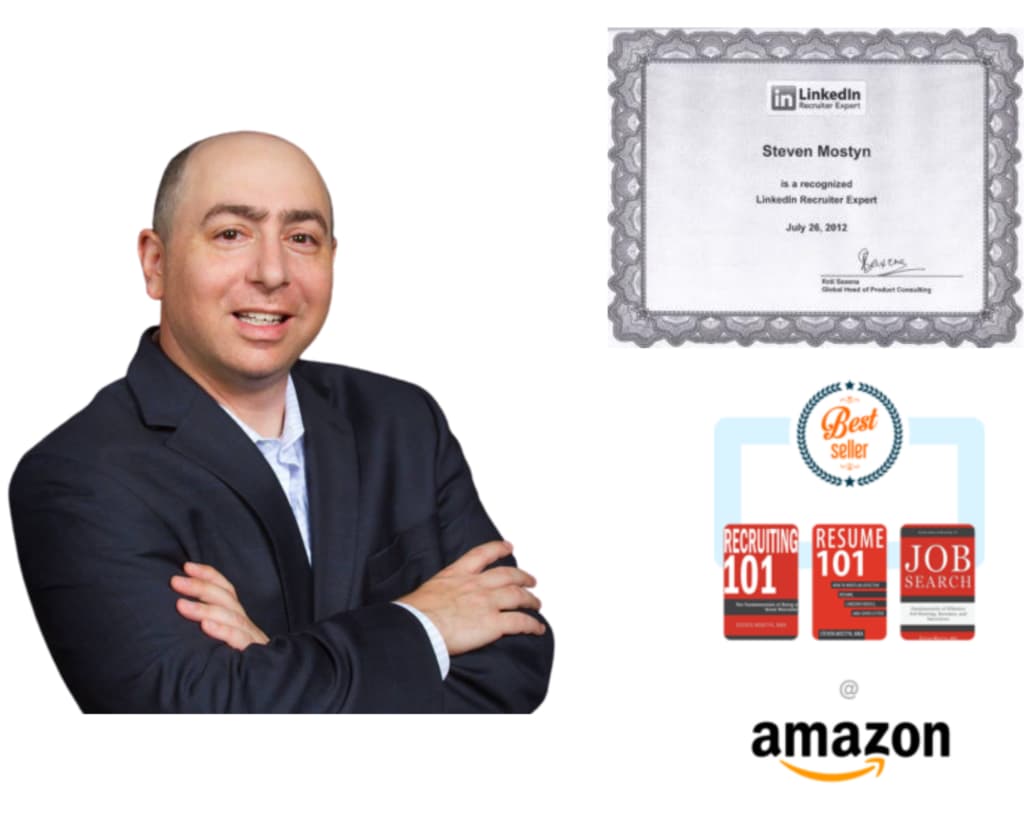
When Steven Mostyn started his recruiting career more than two decades ago, he never imagined he would one day reinvent the industry. Over the years, he recruited for some of the most powerful organizations in the United States , Amazon, Microsoft, Oracle, Deloitte, Aon, AdventHealth, among others. He sat inside the hiring machines of the corporate giants, witnessing firsthand what worked, what didn’t, and what left talented candidates stuck on the outside looking in.
That experience would ultimately drive him to flip the model of recruiting on its head.
Steven, when you started your recruiting career, did you ever think you would end up reshaping the industry?
Not at all. Back then, I was focused on filling critical roles for some of the biggest companies in the world. But I kept seeing a pattern: highly skilled candidates would get overlooked not because of ability, but because of how they were positioned, how they prepared for interviews, or because of unseen blockers in their search. That stuck with me.
How did that realization lead to Career Agents?
Steven Mostyn: In 2019, I launched SuperStar Resume, focused on optimizing résumés and LinkedIn profiles. It worked, but I realized résumés were just the beginning. By 2024, I expanded into Career Agents, a full-service reverse recruiting firm. Our mission is to identify what is holding candidates back and fix it. We position them correctly, prepare them for interviews, and market them directly to decision-makers.
How would you explain reverse recruiting to someone who has never heard of it?
Reverse recruiting is about flipping the traditional model. Instead of companies hiring recruiters to find talent, individuals hire us to act as their agents. We don’t wait for job postings. We proactively market our clients to decision-makers, set up interviews, and prepare them for the process. Think of it like having a talent agent in Hollywood, but for your career.
What makes your approach unique?
The difference is our team. We are all former recruiters. We know what stands out to hiring managers, because we’ve been the ones making those calls. That insider knowledge helps us position our clients as the best possible candidates.
Reverse recruiting has had a mixed reputation in the past. How do you make sure Career Agents stands apart?
The problem was that some companies misused the term. They promised too much, didn’t deliver, and sometimes acted as résumé mills. At Career Agents, we’re different. We only take on clients we believe we can help. We also offer accountability , including a job-offer guarantee. That transparency and selective approach is what has built our Trustpilot reputation and client loyalty.
Some people search online, “Is reverse recruiting a scam?” How do you respond to that?
I respond very strongly: No, reverse recruiting is not a scam. Like any industry, there have been bad actors who overpromised and underdelivered, and unfortunately, they gave the term a bad reputation. But what we do at Career Agents is fundamentally different. We act as true agents for our clients, not just writing résumés, but actively marketing them, making introductions, preparing them for interviews, and negotiating offers. Our success rate, our job-offer guarantee, and our verified reviews speak louder than any skepticism. The results are real, the careers changed are real, and our reputation has been earned client by client.
Career Agents has earned strong reviews online. What do your clients say about their experience?
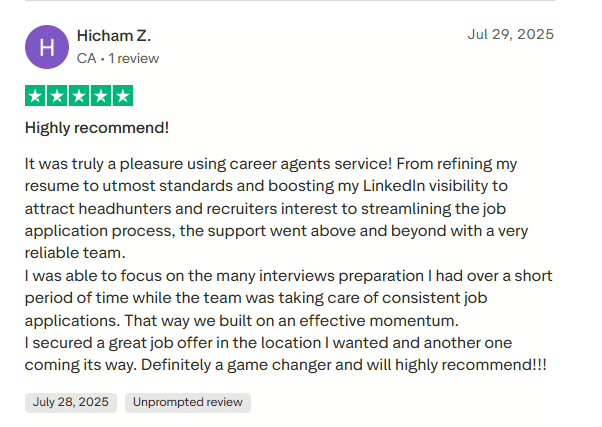
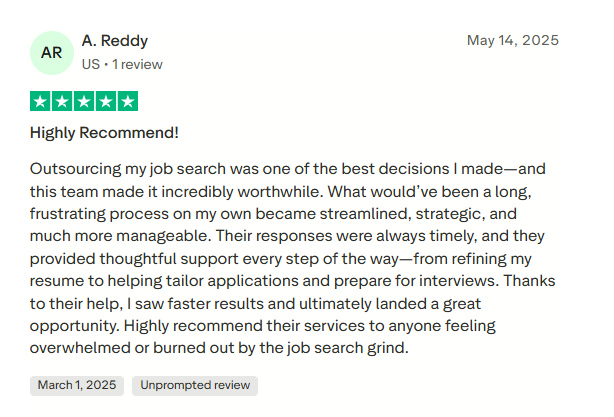
The feedback has been incredible. On Trustpilot, our clients consistently describe our service as life-changing. They talk about how our team’s recruiter background, personalized strategy, and relentless outreach gave them confidence and results. Many say we helped them land roles they never thought possible. For me, those reviews are more than testimonials , they’re proof that our model works and that we’re making a real difference in people’s lives.
Many of your clients are executives. Can you talk about that?
Absolutely. I’ve personally managed searches for CEOs, CFOs, VPs, and senior directors. These are people with outstanding track records who sometimes still feel stuck or undervalued. They don’t need job boards , they need a strategy. We refine how they present themselves, connect them to the right people, and prepare them for the highest-stakes interviews.
What results are you seeing?
On average, our clients improve their salaries by 15 percent or more. Even in tough markets, we’re helping executives and professionals land roles that pay better, carry more responsibility, and align with their career goals.
We’re also very selective. That’s why we offer a free consultation. If expectations aren’t realistic, or if we don’t believe we can significantly improve a client’s situation, we say no. That’s part of why our success rate is so high.
Reverse recruiting has gotten a bad reputation in the past. Why is that?
The term was misused by companies that promised too much and delivered too little. Some were just résumé mills calling themselves reverse recruiters. That gave the whole concept a bad name.
What we do is different. We act as true agents for candidates , not just writing documents, but marketing them, opening doors, preparing them, and negotiating on their behalf.
So what is your actual success rate?
The vast majority of our clients land new roles within six months. We even offer a job-offer guarantee: if they don’t, we extend services or refund part of the fee. That accountability sets us apart.
You’ve also written several best-selling books. How do they connect to your philosophy?
My books, like Recruiting 101: The Fundamentals of Being a Great Recruiter, share the lessons I learned over decades in the field. They focus on fundamentals like communication, candidate experience, and relationship-building. The same principles that make a recruiter great can also help job seekers succeed.
Career Agents also provides outplacement services. How does that differ from reverse recruiting?
Reverse recruiting is one-to-one, focused on an individual who hires us directly. Outplacement, on the other hand, is offered by companies that want to support employees impacted by layoffs. In both cases, we provide résumé optimization, LinkedIn positioning, and active outreach, but the key difference is who sponsors the service. For employers, it’s about treating people with dignity while protecting their brand.
With industries going through rapid change, where do you see outplacement playing the biggest role in the next five years?
Layoffs aren’t going away; if anything, they’re happening faster with automation, mergers, and restructuring. Outplacement is no longer a “nice to have.” It’s becoming a strategic necessity for companies that want to safeguard their employer brand. In the future, I believe we’ll see more companies proactively offering outplacement as part of their culture, not just during crisis moments.
What does this work mean to you personally?
Steven Mostyn: It means everything. A job is not just a paycheck. It’s food on the table, it supports families, and it defines people in so many ways. That’s why my team and I take every step so seriously. We know we’re not just helping people get jobs , we’re helping them build better lives.