100 AI people
to watch.
The bets
behind them.
The research, open infrastructure and business decisions behind AI’s next chapter. One documented contribution and one testable 2027 thesis for every person.

AI’s next chapter depends on more than the people announcing the biggest models. It depends on who makes the systems cheaper to run, turns research into useful products, connects them to the physical world and establishes whether their claims hold up.
I built this watchlist around those decisions. For each person, I start with a documented contribution or public role, explain its economic significance and name a result I would watch in 2027. Some records establish a current role; others establish a historical contribution. I keep that distinction visible. The numbering follows chapter order. This is an editorial selection, not a ranking or a forecast of who will become rich.
What the records change.
Commercial support can preserve an open project.
The ggml team’s announcement describes joining Hugging Face alongside a commitment to community autonomy. I would follow that commitment through releases and governance, rather than equate sponsorship with proprietary ownership.
Money raised after a milestone is a different measure.
Gamma’s account separates its operating milestone with initial funding from the new Series B. That distinction changes the capital-efficiency question. I preserve the event dates instead of mixing the amounts into one headline ratio.
A deal price is not a founder’s net worth.
The Base44 acquisition terms contain retention payments and conditional earn-outs. They establish a company transaction, not verified personal proceeds. Employee tenders belong in a separate category too.
An announcement is not the final artifact.
Reflection’s October Beam announcement promised weights and supporting materials later in the month. I would check the release and independent evaluation before treating announcement-day performance claims as demonstrated delivery.
Explore the bottlenecks.
Choose a field, find a name or follow a company. Each person has one primary discovery tag; these counts describe our selection, not the industry.
100 of 100 people. Numbers follow chapter order, not rank.
Open the complete people index 100 entries
| Person | Organization / record | What to watch |
|---|---|---|
| 01Alexander Wei ↗ Researcher | OpenAIResearch scientist | Reasoning needs an auditable result |
| 02Jerry Tworek ↗ Researcher | OpenAI o1Research leadership, 2024 credit record | The people behind reinforcement learning |
| 03Jason Wei ↗ Researcher | Meta / reasoning researchResearcher, according to personal page | Making reasoning usable |
| 04Hongyu Ren ↗ Researcher | OpenAI o1Foundational contributor, 2024 record | Attribution before the talent story |
| 05Sholto Douglas ↗ Researcher | Anthropic / reinforcement learningResearch discussed in a first-person interview | Where the reward signal comes from |
| 06Joshua (Josh) Batson ↗ Researcher | Anthropic interpretabilityCircuits project lead, 2025 research record | A model’s explanation is not its mechanism |
| 07Julian Schrittwieser ↗ Researcher | AlphaProof researchContributor describing the project’s published work | Reasoning that a checker can inspect |
| 08Neel Nanda ↗ Researcher | Google DeepMindMechanistic interpretability team lead | Reverse-engineering the model |
| 09Jack Parker-Holder ↗ Researcher | Google DeepMindResearch scientist, personal-page record | Training environments without building every world |
| 10Lilian Weng ↗ ResearcherWriter | Lil’LogResearch writer | Separate self-improvement from the slogan |
| 11Liam Fedus ↗ Founder | Periodic LabsCo-founder, founding announcement | What a founding round needs to produce |
| 12Misha Laskin ↗ Founder | ReflectionCo-founder and CEO, NVIDIA announcement | Announcing a model and delivering it are different events |
| 13Luo Fuli ↗ Researcher | Xiaomi MiMoTechnical-report co-author | Efficiency is also an engineering problem |
| 14Yao Shunyu (Vinces Yao) ↗ Researcher | Reflexion researchCo-author | Learning from feedback without retraining every time |
| 15Lin Junyang (Justin Lin) ↗ Researcher | Qwen researchQwen2 technical-report co-author | Open models need a usable deployment path |
| 16Yang Zhilin ↗ Researcher | Kimi researchKimi K2 technical-report co-author | Agentic models need workflow economics |
| 17Chelsea Finn ↗ FounderResearcher | Stanford / Physical IntelligenceAssistant professor and co-founder | The robot has to learn outside the demonstration |
| 18Sherry Yang ↗ Researcher | NYU / Google DeepMindAssistant professor and staff research scientist | Generative models as environments for action |
| 19Levent Alpöge ↗ Researcher | AI-assisted mathematicsResearcher named in a contested priority account | Credit and checking belong in the same story |
| 20Sara Hooker ↗ Researcher | Hardware and machine-learning researchAuthor of The Hardware Lottery | The hardware can select the winning idea |
| 21Joelle Pineau ↗ LeaderResearcher | CohereChief AI Officer | Research leadership meets enterprise constraints |
| 22Woosuk Kwon ↗ Founder | Inferact / vLLMCo-founder named in launch record | A business around an open inference engine |
| 23Ying Sheng ↗ Founder | RadixArk / SGLangCo-founder and CEO, 2026 event biography | Inference and training infrastructure share the bottleneck |
| 24Georgi Gerganov ↗ Engineer | ggml / llama.cppCreator and project steward | Commercial backing without abandoning the community |
| 25Tri Dao ↗ FounderResearcher | Princeton / Together AIAssistant professor and co-founder/chief scientist | Reducing memory traffic, not just buying more chips |
| 26Daniel Han ↗ Founder | UnslothFounder | Make adaptation cheaper to attempt |
| 27Omar Khattab ↗ Engineer | MIT / DSPyAssistant professor | Program the system, then measure it |
| 28Lysandre Debut ↗ Engineer | Hugging Face TransformersCo-author of the v5 announcement | The model definition is part of the infrastructure |
| 29Erik Bernhardsson ↗ Founder | ModalFounder and CEO | Compute has to fit the developer’s workflow |
| 30Lin Qiao ↗ Founder | FireworksCo-founder and CEO | A revenue run rate is not a profit figure |
| 31Tuhin Srivastava ↗ Founder | BasetenCEO and co-founder | Inference is a production engineering job |
| 32Gorkem Yurtseven ↗ Founder | falCo-founder | Creative models need a distribution layer |
| 33Jeffrey Morgan ↗ Founder | OllamaFounder, YC record | Local deployment changes the control question |
| 34Simon Hørup Eskildsen ↗ Founder | turbopufferCo-founder | Search economics can shape the agent |
| 35Ankur Goyal ↗ Founder | BraintrustFounder, first-person company announcement | Evaluation becomes an operating expense |
| 36Anastasios Angelopoulos ↗ Founder | ArenaCo-founder and CEO | Preference is useful, but it is a particular measure |
| 37David Soria Parra ↗ Engineer | Model Context ProtocolLead maintainer | Governance is infrastructure too |
| 38Gavin Uberti ↗ Founder | EtchedCo-founder and CEO | Specialization needs a durable workload |
| 39Reiner Pope ↗ Founder | MatXCo-founder and CEO | The compiler belongs in the chip story |
| 40Sharon Zhou ↗ Leader | AMDAI Chief of Staff, 2026 event listing | Software determines whether alternative hardware is useful |
| 41Jerry Liu ↗ Founder | LlamaIndexCo-founder and CEO | The document pipeline can be the product |
| 42Anton Osika ↗ Founder | LovableCo-founder, KTH award record | Creating the app is only the beginning |
| 43Maor Shlomo ↗ Founder | Base44 / WixFounder associated with the acquired product | A transaction headline is not personal proceeds |
| 44Mati Staniszewski ↗ Founder | ElevenLabsCo-founder | Voice models become an enterprise service |
| 45Brendan Foody ↗ Founder | MercorCo-founder and co-CEO | Human expertise stays in the training loop |
| 46Jesse Zhang ↗ Founder | DecagonCo-founder and CEO | A support agent must finish the customer’s problem |
| 47Matan Grinberg ↗ Founder | FactoryCo-founder and company-announcement author | Software autonomy needs an operating model |
| 48Mukund Jha ↗ Founder | EmergentCo-founder and CEO, company announcement | Move from software creation to delegated work |
| 49Cristóbal Valenzuela ↗ Founder | RunwayCo-founder and co-CEO, 2026 event record | Creative output needs a production workflow |
| 50Kareem Amin ↗ Leader | ClayCEO and company-update author | Employee liquidity is not growth capital |
| 51Jan Oberhauser ↗ Founder | n8nFounder and CEO | Automation needs ownership and maintenance |
| 52Robin Rombach ↗ Founder | Black Forest LabsCo-founder, Stanford event record | Efficient visual generation still needs control |
| 53Alex Mashrabov ↗ Founder | HiggsfieldCEO and co-founder, 2026 event record | A creative platform has to earn repeat use |
| 54Grant Lee ↗ Founder | GammaCo-founder and company-announcement author | Capital efficiency needs the right denominator |
| 55James Cadwallader ↗ Founder | ProfoundCo-founder and CEO | Being visible in AI answers is a business problem |
| 56Noah Shinn ↗ Researcher | Reflexion researchPaper co-author | An agent’s memory can help or mislead it |
| 57Lourdes Agapito ↗ FounderResearcher | UCL / SynthesiaProfessor and co-founder, UCL record | Research can become a production tool |
| 58Demi Guo ↗ Founder | PikaCEO and co-founder | The user needs to direct the result |
| 59Mikey Shulman ↗ Founder | SunoCo-founder and CEO | The music business is part of the model business |
| 60Bar Winkler ↗ Leader | WonderfulCEO, company team record | Integration is part of the product cost |
| 61Chris Pedregal ↗ Founder | GranolaProduct founder associated with dated release notes | Meeting context should survive the meeting |
| 62Zachary Lipton ↗ Researcher | AbridgeChief Scientific and Technology Officer | Clinical documentation has to be faithful |
| 63Nikhil Buduma ↗ Founder | Ambience HealthcareCo-founder and CEO | The workflow extends beyond the transcript |
| 64Zachary Ziegler ↗ Founder | OpenEvidenceFounder identified by investor record | A cited answer still needs source discipline |
| 65Suchi Saria ↗ Founder | Bayesian HealthFounder | Useful alerts must fit the care team |
| 66Joshua Meier ↗ Founder | Chai DiscoveryCo-founder, investor account | A designed molecule must pass an experiment |
| 67Brian Hie ↗ Researcher | Stanford / Arc InstituteResearcher and Evo 2 co-senior author | Biological prediction needs experimental grounding |
| 68Max Jaderberg ↗ LeaderResearcher | Isomorphic LabsPresident, effective January 2026 | Research leadership takes on a delivery obligation |
| 69Emma Lundberg ↗ Researcher | Stanford / Human Protein AtlasAssociate professor and Cell Atlas director | The dataset can be the scientific advantage |
| 70Karol Hausman ↗ FounderResearcher | Physical IntelligenceCo-founder, personal research record | General-purpose robotics needs repeatable transfer |
| 71Deepak Pathak ↗ Researcher | Carnegie Mellon roboticsFaculty researcher | Learning from the world rather than a perfect dataset |
| 72Bernt Øivind Børnich ↗ Founder | 1XFounder and CEO, product announcement | A household robot is a service commitment |
| 73Carolina Parada ↗ Researcher | Google DeepMind roboticsGemini Robotics announcement author | Embodied reasoning needs an action test |
| 74Max Junestrand ↗ Founder | LegoraCEO and co-founder, 2026 event record | Legal work needs traceable context |
| 75Gabriel Pereyra ↗ Founder | HarveyCo-founder and President, 2024 announcement | Distribution and trust are part of the product |
| 76George Sivulka ↗ Founder | HebbiaFounder and CEO, company announcement | Research is only one stage of the financial workflow |
| 77Gabriel Stengel ↗ Builder | RogoCompany financing-announcement author | The banking workflow is the unit of value |
| 78Antoine Bordes ↗ Researcher | HelsingChief Scientist, January 2026 record | Grounding intelligence in structured facts |
| 79Oege de Moor ↗ FounderResearcher | XBOWFounder associated with the company’s security research | Count validated findings, not just generated exploits |
| 80Ekin Dogus Cubuk ↗ Founder | Periodic LabsCo-founder, company launch record | Materials research needs a physical feedback loop |
| 81Jonathan Godwin ↗ Leader | Orbital IndustriesChief Executive Officer | A named industrial deployment is a concrete lead |
| 82Kristen DiCerbo ↗ Educator | Khan AcademyChief Learning Officer | Start with the learning problem |
| 83Alex Kendall ↗ Founder | WayveCo-founder and CEO | Driving intelligence needs evidence on the road |
| 84Beth Barnes ↗ Founder | METRFounder and CEO | Capability and useful productivity are different measures |
| 85Marius Hobbhahn ↗ Founder | Apollo ResearchCEO and co-founder | An evaluator needs more than a dramatic example |
| 86Buck Shlegeris ↗ Leader | Redwood ResearchChief Executive Officer | Design for a model that may not cooperate |
| 87Owain Evans ↗ Researcher | Truthful AIResearch-team lead | A narrow change can have a broader consequence |
| 88Dean W. Ball ↗ Policy | OpenAI / FAIHead of Strategic Futures, announced July 2026 | Policy work changes commercial constraints |
| 89Lennart Heim ↗ Researcher | Compute governance researchTraining-compute paper co-author | A threshold is an initial filter, not the whole risk assessment |
| 90Kai Zenner ↗ Policy | European ParliamentDigital policy adviser, OECD biography | Implementation can matter more than the headline law |
| 91Helen Toner ↗ Policy | CSET, GeorgetownExecutive Director | Policy research needs a documented chain of reasoning |
| 92Sarah Guo ↗ Investor | ConvictionFounder and investment-thesis author | The investment thesis should survive the market cycle |
| 93Nathan Benaich ↗ Investor | Air Street CapitalSolo member of investment staff | Make predictions inspectable, then score them |
| 94Leigh Marie Braswell ↗ Investor | Kleiner PerkinsPartner | Product experience meets capital allocation |
| 95Grace Isford ↗ Investor | Lux CapitalPartner | The physical-world bet has a different delivery schedule |
| 96Simon Willison ↗ EngineerWriter | Independent developmentDatasette creator and Django co-creator | Test the tool before accepting the claim |
| 97Nathan Lambert ↗ ResearcherWriter | Interconnects / open post-trainingResearcher and author; departed Ai2 in 2026 | Open weights are not an open training recipe |
| 98Dwarkesh Patel ↗ Host | Dwarkesh PodcastHost | Interviews are evidence of what someone says |
| 99Shawn "swyx" Wang ↗ HostFounder | AI Engineer / Latent SpaceCo-founder and CEO | The people applying models need a shared vocabulary |
| 100Sebastian Raschka ↗ EngineerEducator | Independent LLM research and educationLLM research engineer and author | Implementation exposes what a diagram leaves out |
All 100 entries appear in the chapters below. Search filters this index; it does not hide the article’s evidence.
Twelve files to start with.
These entries examine especially useful documentary distinctions. Featured placement is an editorial reading choice.
Reasoning, learning and the next model
The people developing and interrogating the systems on which AI products depend.
Alexander Wei
Research scientist
Reasoning needs an auditable result
According to Wei’s research page, Wei identifies his OpenAI research role and lists his participation in the CICERO team.
The business question concerns the gap between an impressive answer and an argument that can survive external checking. Reliable reasoning could reduce expensive expert review, but the review burden is part of the product economics.
Jerry Tworek
Research leadership, 2024 credit record
The people behind reinforcement learning
According to OpenAI’s o1 contribution record, OpenAI credits Jerry Tworek with overall leadership within its reasoning-research section.
That is a more precise starting point than a talent-market headline. I want to understand whether the training approaches associated with reasoning systems become repeatable tools for useful work.
Jason Wei
Researcher, according to personal page
Making reasoning usable
According to Wei’s own research page, Wei says he works at Meta Superintelligence Labs and lists chain-of-thought and instruction-tuning work.
I am interested in the cost of turning a promising research technique into a dependable user experience. More reasoning is valuable only when the extra computation improves the result enough to justify its cost.
Hongyu Ren
Foundational contributor, 2024 record
Attribution before the talent story
According to OpenAI’s o1 contribution record, Hongyu Ren appears among the foundational contributors to o1 reasoning research.
I would follow subsequent attributable research rather than use recruiting reports as a proxy for technical progress. The economic question is whether the work improves the cost or reliability of a reasoning system.
Sholto Douglas
Research discussed in a first-person interview
Where the reward signal comes from
According to Douglas and Bricken’s Claude discussion, Sholto Douglas discusses reinforcement learning and the difficulty of specifying useful rewards outside games.
I am watching that design problem because businesses need agents rewarded for finishing the right task, not merely producing persuasive output. A cheap automated reward that misses the real objective can create expensive errors.
Joshua (Josh) Batson
Circuits project lead, 2025 research record

A model’s explanation is not its mechanism
According to The attribution-graphs research record, the contribution section credits Joshua Batson with leading the overall circuits project and helping develop its methodology.
This is a useful documentary distinction: a model’s fluent explanation is not evidence of how it reached an answer. I am watching whether mechanistic analysis becomes practical enough to help diagnose failures before deployment.
The record is unusually helpful about individual responsibility. Its contribution section separates project leadership, graph computation, interventions and visualization. I would preserve that attribution rather than describe one researcher as the person who explained an entire model.
My commercial question is whether an explanation changes a decision. If a method identifies a failure but cannot predict when it will recur or help prevent it, its value remains narrower than a buyer might assume. The next step is a reproducible intervention, not a more elaborate diagram.
Julian Schrittwieser
Contributor describing the project’s published work
Reasoning that a checker can inspect
According to Schrittwieser’s AlphaProof account, Schrittwieser describes the AlphaProof system and links its published mathematical-reasoning paper.
Formal checking offers a clearer success condition than a convincing paragraph. I am watching whether that discipline spreads to useful software or scientific reasoning, while keeping formal benchmarks separate from commercial readiness.
Neel Nanda
Mechanistic interpretability team lead
Reverse-engineering the model
According to Nanda’s account of his work, Nanda says he leads DeepMind’s mechanistic interpretability team and identifies TransformerLens among his projects.
I see interpretability as an attempt to lower the cost of understanding failures that ordinary testing misses. The interesting business consequence would be better deployment decisions, rather than an explanation attached after something goes wrong.
Jack Parker-Holder
Research scientist, personal-page record
Training environments without building every world
According to Parker-Holder’s research page, Parker-Holder describes work on world models and points to Genie as an example.
Synthetic environments could change the economics of training agents, but a convincing generated scene is not automatically a faithful simulator. I am watching the link between simulated experience and measurable performance elsewhere.
Lilian Weng
Research writer
Separate self-improvement from the slogan
According to Weng’s dated research notes, Weng’s July 2026 notes discuss recursive self-improvement; her blog also examines test-time computation.
Her useful contribution is making the technical distinctions inspectable. I would separate better outputs, better training pipelines and a system modifying itself, because their evidence requirements and business implications are different.
Liam Fedus
Co-founder, founding announcement

What a founding round needs to produce
According to a16z’s Periodic Labs investment announcement, the investor names Liam Fedus as a co-founder and describes a $300M founding round dated September 30, 2025.
I would judge the scientific bet by reproducible experiments and the cost of obtaining useful results. Capital provides room to attempt the work; it does not establish that an AI scientist or a profitable laboratory already exists.
The investor's round amount is documented; a company valuation is not stated in that opened record. I would resist filling the gap by treating a fundraising discussion as a completed financing. The dated capital ledger separates what was announced from what a secondary headline might imply.
The cost of scientific progress includes equipment, experiments, repeat attempts and expert interpretation. That makes the financial test different from a software demonstration: I want to know whether useful experimental throughput improves, and which parts of the loop still require people.
Misha Laskin
Co-founder and CEO, NVIDIA announcement
Announcing a model and delivering it are different events
According to Reflection’s Beam announcement, the October 5 announcement promised the model’s weights and supporting artifacts later that month.
My focus is the sequence from announcement to accessible artifacts to independent evaluation. A model’s economic usefulness depends on the cost of serving useful outputs, not simply the size of its parameter count.
Further records: NVIDIA's coalition announcement
Luo Fuli
Technical-report co-author
Efficiency is also an engineering problem
According to The MiMo-V2-Flash technical report, Fuli Luo appears on the report’s author list for a model using a mixture-of-experts and hybrid-attention architecture.
The question for 2027 is whether the serving system captures the architecture’s intended savings under actual workloads. A theoretical reduction is useful only if engineering turns it into reliable, cheaper service.
Yao Shunyu (Vinces Yao)
Co-author
Learning from feedback without retraining every time
According to The Reflexion paper, Shunyu Yao is a co-author of research that uses linguistic feedback and episodic memory to improve an agent’s subsequent attempts.
That raises a practical question about where improvement should happen: in the model weights, the surrounding software or the task history. I would compare those choices by reliability, maintenance effort and cost.
Lin Junyang (Justin Lin)
Qwen2 technical-report co-author
Open models need a usable deployment path
According to The Qwen2 technical report, Junyang Lin is listed among the authors of the Qwen2 model-family report.
The business question concerns the combination of model capability, accessible artifacts and practical deployment. The paper documents a research contribution; it does not establish subsequent financing or current employment.
Yang Zhilin
Kimi K2 technical-report co-author
Agentic models need workflow economics
According to The Kimi K2 technical report, Zhilin Yang appears on the author list of the Kimi K2 report, which describes an agentic model and released checkpoints.
My focus is the cost of completing an entire workflow, including retries and tool use. A good benchmark result can be a starting point, but it does not establish a low cost per successfully completed business task.
Chelsea Finn
Assistant professor and co-founder
The robot has to learn outside the demonstration
According to Finn’s Stanford page, Finn identifies her Stanford appointment, Physical Intelligence co-founding role and research on learning through robotic interaction.
The business question concerns the amount of new data and human intervention needed when a robot encounters an unfamiliar setting. That determines whether a general-purpose system can scale beyond a carefully prepared environment.
Sherry Yang
Assistant professor and staff research scientist
Generative models as environments for action
According to Yang’s research page, Sherry Yang identifies her NYU and DeepMind roles and a focus on reinforcement learning and generative modeling.
I am interested in how models support decision-making, rather than just generate plausible outputs. The economic test is whether that research reduces the data or experimentation needed for a useful agent.
Levent Alpöge
Researcher named in a contested priority account
Credit and checking belong in the same story
According to OpenAI’s account of the mathematical work, OpenAI’s September account discusses Alpöge’s work and acknowledges priority concerning a forced-Euler result.
I would keep that interested account separate from an independent resolution of the mathematics or credit dispute. AI-assisted research needs an inspectable chain of attribution as well as a checked result.
Sara Hooker
Author of The Hardware Lottery
The hardware can select the winning idea
According to Hooker’s Hardware Lottery essay, Sara Hooker examines how available hardware and software can favor particular research directions.
I find that framework useful when evaluating supposedly inevitable AI architectures. Technical success can reflect an ecosystem’s existing investments as well as the merits of the algorithm, which affects who can compete.
Joelle Pineau
Chief AI Officer
Research leadership meets enterprise constraints
According to Cohere’s executive-team page, Cohere lists Joelle Pineau as Chief AI Officer and describes an enterprise-focused AI platform.
The question for 2027 is whether research becomes useful inside organizations with private data and operational constraints. The decisive evidence would be dependable deployment and repeatable customer value, rather than a new model alone.
The engineering behind useful intelligence
Serving, search, data, developer tools and the cost of making AI work.
Woosuk Kwon
Co-founder named in launch record
A business around an open inference engine
According to Inferact’s launch announcement, Inferact names Woosuk Kwon among its founders and announces $150M raised at an $800M valuation on January 22, 2026.
What matters next is how commercial engineering support interacts with the open project. Sponsoring an engine is different from owning all of its software, community or downstream value.
Ying Sheng
Co-founder and CEO, 2026 event biography

Inference and training infrastructure share the bottleneck
According to AMD’s 2026 speaker biography, AMD’s event biography identifies Ying Sheng as RadixArk co-founder and CEO and an SGLang co-creator and core contributor.
I am watching the engineering that turns open models into reliable services. The company’s separate funding record names a co-led round; neither record makes SGLang a proprietary asset or proves performance claims.
The financing record is specific about roles too: Accel led and Spark Capital co-led. That is a small correction, but it illustrates why I trace the original announcement rather than summarize an aggregator. The disclosed post-money basis is also preserved in the table.
For the technical bet, I would compare the entire workload: hardware, batch sizes, latency targets, quality and utilization. A fast kernel is valuable, but a buyer pays for a service that must remain fast and dependable under changing traffic. Those are the outcomes I would track.
Further records: RadixArk's seed announcement
Georgi Gerganov
Creator and project steward
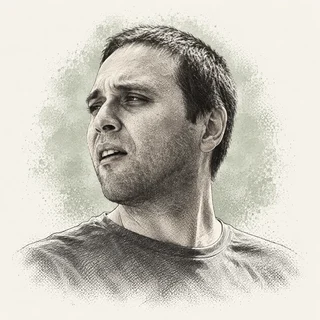
Commercial backing without abandoning the community
According to The ggml team’s Hugging Face announcement, the February 20 announcement says Gerganov and the team are joining Hugging Face while retaining technical direction and community autonomy.
I see the governance terms as part of the business story. Support can make maintenance sustainable, but the value of local inference also depends on users continuing to control how and where their models run.
This is a counterexample to an overly simple claim that successful open-source projects become private companies. The announcement describes institutional support alongside a commitment to autonomous technical direction. That commitment is something readers can revisit through releases and governance, rather than accept as a permanent guarantee.
The economic question is who can continue to use the work and on what terms. Portability and local control can be valuable without producing a large personal-wealth estimate for a maintainer. I would follow maintenance, usable releases and community participation before assigning a commercial outcome.
Tri Dao
Assistant professor and co-founder/chief scientist
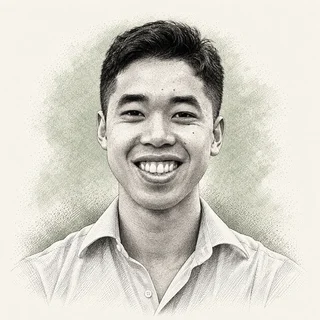
Reducing memory traffic, not just buying more chips
According to The official FlashAttention implementation, the repository credits Tri Dao and collaborators for FlashAttention and Dao for FlashAttention-2.
I am watching improvements that let existing hardware do more useful work. An optimization can change cost per task across many products, but the effect depends on workloads and integrations rather than a universal speed-up number.
The implementation links the named research to inspectable code. That is a stronger starting point than an unsourced statement that an optimization powers every major AI product. Its effect still depends on the model, hardware and surrounding pipeline.
I would report a gain against a stated baseline and keep quality constant. The relevant cost is completing a useful task, including memory movement, orchestration and other overhead. A component improvement can create broad value, but the paper's benchmark should not be silently converted into an application-wide saving.
Further records: Tri Dao's current research page
Daniel Han
Founder
Make adaptation cheaper to attempt
According to Y Combinator’s Unsloth record, the company record names Daniel Han as a founder and describes open-source reinforcement learning and fine-tuning tools.
The question for 2027 is whether more teams can adapt models without owning a large training organization. Lower setup cost matters, but the trained model still needs a reliable evaluation and a deployment budget.
Omar Khattab
Assistant professor
Program the system, then measure it
According to MIT’s faculty record, MIT lists Omar Khattab as an assistant professor in EECS.
His associated DSPy research direction puts attention on building and optimizing language-model programs. I am watching whether systematic evaluation can reduce the repeated prompt tweaking that makes agent projects costly to maintain.
Further records: DSPy official repository
Lysandre Debut
Co-author of the v5 announcement
The model definition is part of the infrastructure
According to The Transformers v5 announcement, Lysandre is among the announcement’s authors; the post describes interoperability across training, inference and deployment tools.
My focus is the maintenance work that lets a model reach users without every team rebuilding its implementation. Compatibility can be economically valuable even when it is less visible than a launch benchmark.
Erik Bernhardsson
Founder and CEO
Compute has to fit the developer’s workflow
According to Bernhardsson’s own biography, Bernhardsson identifies himself as Modal’s founder and CEO and describes earlier open-source work including Luigi and Annoy.
The business question concerns the gap between renting hardware and getting useful work done on it. A good compute platform reduces deployment and orchestration effort, but its value must survive comparison with direct cloud infrastructure.
Lin Qiao
Co-founder and CEO
A revenue run rate is not a profit figure
According to Fireworks’ investor-hosted July announcement, the announcement identifies Lin Qiao and reports a $1.505B round plus an annualized revenue run rate exceeding $1B.
I would separate those measures before drawing a conclusion about the business. Serving revenue can grow alongside substantial compute costs; the useful question is what remains after delivering each workload.
Tuhin Srivastava
CEO and co-founder
Inference is a production engineering job
According to Baseten’s team and engineering page, Baseten identifies Tuhin Srivastava as CEO and co-founder and describes deployment engineering under real traffic.
The question for 2027 is whether the company can make reliability and latency predictable when models and customer workloads change. That is where infrastructure earns recurring revenue, rather than simply providing access to a GPU.
Gorkem Yurtseven
Co-founder
Creative models need a distribution layer
According to fal’s company history, fal says Burkay Gur and Gorkem Yurtseven founded the company in 2021 to address AI infrastructure challenges.
The question for 2027 is whether a platform for generative media can make model access dependable enough for professional products. Distribution matters, but providers must distinguish their own contribution from the underlying models they serve.
Jeffrey Morgan
Founder, YC record
Local deployment changes the control question
According to Y Combinator’s Ollama record, the record names Jeffrey Morgan as a founder of a tool for running language models.
What matters next is how local model access changes privacy, portability and the cost of experimentation. Downloads and developer enthusiasm are useful signals, but neither establishes an enterprise business by itself.
Simon Hørup Eskildsen
Co-founder
Search economics can shape the agent
According to Eskildsen’s own biography, Eskildsen identifies turbopuffer as a search engine for object storage that he co-founded in 2023.
My focus is the cost of retaining and retrieving the context agents need. A cheaper search layer could change which products are feasible, but latency and correctness still matter when the data is large or frequently updated.
Ankur Goyal
Founder, first-person company announcement
Evaluation becomes an operating expense
According to Goyal’s Series B announcement, Goyal describes founding Braintrust after building evaluation tools at Impira and Figma; the February announcement states an $80M round.
The question for 2027 is whether evaluation becomes a repeatable part of deployment rather than a launch checklist. The business case is strongest when teams can connect a test result to a decision about reliability and cost.
Anastasios Angelopoulos
Co-founder and CEO
Preference is useful, but it is a particular measure
According to Angelopoulos’s research page, Angelopoulos identifies his Arena role and lists work on human-preference evaluation and conformal prediction.
What matters next is how evaluation platforms explain their populations, tasks and uncertainty. A preference ranking can guide a purchase, but it is not a universal measure of correctness or suitability for every workflow.
David Soria Parra
Lead maintainer
Governance is infrastructure too
According to MCP’s October maintainer record, the October 1, 2026 record lists David Soria Parra and Den Delimarsky as lead maintainers.
The business question concerns the rules that let tools connect to agents without every integration becoming a special case. The shared maintenance structure is more useful evidence than describing one person as the owner of an industry protocol.
Gavin Uberti
Co-founder and CEO
Specialization needs a durable workload
According to Etched’s leadership page, Etched identifies Gavin Uberti as co-founder and CEO in its leadership section.
My focus is the trade-off behind specialized AI hardware: advantages can be large if the workload stays suitable, but chips take time and capital to develop. The full system, not an isolated operation, must justify the commitment.
Reiner Pope
Co-founder and CEO
The compiler belongs in the chip story
According to MatX’s team and technical description, MatX names Reiner Pope as co-founder and CEO and describes work spanning silicon, compilers, kernels and models.
The question for 2027 is whether coordinated hardware and software design can improve useful training or serving economics. A company can be technically differentiated without the evidence yet establishing a production advantage.
Jerry Liu
Co-founder and CEO
The document pipeline can be the product
According to KPMG’s LlamaIndex investment announcement, the May 2025 record identifies Jerry Liu and explains managed document parsing, ingestion and retrieval services.
The business question concerns the unglamorous preparation of enterprise data. An agent cannot use a document reliably if tables, structure or permissions are lost before the model sees it.
From a capable model to a durable business
The products, distribution and economics that matter after the first demonstration.
Anton Osika
Co-founder, KTH award record
Creating the app is only the beginning
According to KTH’s 2025 innovation-award account, KTH identifies Anton Osika and Fabian Hedin as Lovable’s founders and describes natural-language app creation.
I am watching what happens after the first working prototype. A business application must remain understandable, secure and maintainable as users request changes. That continuing work determines whether creation becomes durable value.
Maor Shlomo
Founder associated with the acquired product
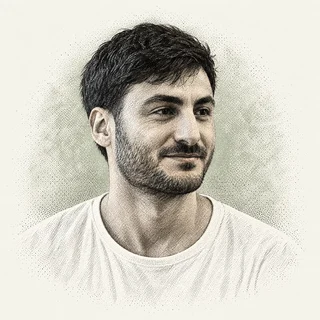
A transaction headline is not personal proceeds
According to Wix’s Base44 acquisition terms, Wix describes approximately $80M initial consideration, including employee retention payments, and conditional earn-outs through 2029.
For Maor Shlomo’s story, I would follow the operating product and the actual deal definitions. The consideration is not a verified measure of his wealth, and future conditional payments do not become cash already received.
The buyer's announcement describes a transaction with multiple elements. Approximately $25M of employee retention payments is included within the initial consideration, rather than simply added to it. Conditional earn-outs depend on later performance. Neither detail establishes Shlomo's own after-tax proceeds.
For the product, the next chapter is distribution and maintenance inside Wix. I would look for evidence of recurring use and successful application changes, rather than assume an acquisition ensures that every generated app becomes a durable business tool.
Mati Staniszewski
Co-founder
Voice models become an enterprise service
According to Staniszewski’s May company update, the update identifies Mati Staniszewski and reports that ElevenLabs surpassed $500M ARR in the first four months of 2026.
My focus is the shift from compelling generated voices to dependable communication workflows. ARR is a company-reported operating measure; the economics also depend on retention, inference costs and how customers use the service.
Brendan Foody
Co-founder and co-CEO
Human expertise stays in the training loop
According to Mercor’s mission and leadership statement, Mercor names Brendan Foody and Adarsh Hiremath as co-founders and co-CEOs and describes an expert network for training and evaluation.
The business question concerns the economics of human judgment as a model input. Labor-market participation, payment volume and company revenue are different measures; each needs its own definition before comparison.
Jesse Zhang
Co-founder and CEO
A support agent must finish the customer’s problem
According to Decagon’s company and founders page, Decagon identifies Jesse Zhang as co-founder and CEO and describes agents across customer-service channels.
I am watching resolution quality rather than how many conversations a bot handles. A low-cost answer can become expensive if it creates escalations, repeats mistakes or damages the customer relationship.
Matan Grinberg
Co-founder and company-announcement author
Software autonomy needs an operating model
According to Factory’s September financing announcement, Grinberg and Reyes announce a $200M financing at a $5B valuation on September 15, 2026, following the earlier Series C.
The business question concerns the cost of reviewing and maintaining agent-produced software. The later financing is a distinct company event, not a replacement date for the earlier round or a personal-wealth estimate.
Mukund Jha
Co-founder and CEO, company announcement
Move from software creation to delegated work
According to Emergent’s Wingman launch account, the April 2026 account names Mukund Jha and describes an agent operating through messaging interfaces.
The question for 2027 is whether familiar distribution channels make useful automation easier to adopt. Access to messages and tools creates operational responsibilities that a successful demo does not settle.
Cristóbal Valenzuela
Co-founder and co-CEO, 2026 event record
Creative output needs a production workflow
According to Runway’s 2026 summit record, the event materials identify Cristóbal Valenzuela as co-founder and co-CEO.
The business question concerns the transition from isolated generated clips to controllable creative production. Professionals need consistency, revision and usable rights, so the economically relevant output is a finished project rather than a striking sample.
Kareem Amin
CEO and company-update author
Employee liquidity is not growth capital
According to Clay’s January tender announcement, the post by Kareem Amin describes employees being able to sell up to $55M of shares at a $5B valuation.
I would keep that employee-liquidity transaction separate from primary financing. For the product, I am watching whether automation improves useful commercial outcomes rather than simply increasing outbound activity.
Jan Oberhauser
Founder and CEO
Automation needs ownership and maintenance
According to n8n’s official company record, the press page identifies Jan Oberhauser as founder and CEO and dates the company’s founding to 2019.
What matters next is how teams connect models to established workflows. The value comes from dependable orchestration, permissions and exception handling; adding an agent to a flow does not remove those responsibilities.
Robin Rombach
Co-founder, Stanford event record
Efficient visual generation still needs control
According to Stanford’s Rombach speaker biography, the 2024 record identifies Rombach as a Black Forest Labs co-founder and describes work on latent diffusion and visual models.
What matters next is how efficient generation combines with controllable revisions. A professional user needs the intended result on demand, so the number of failed attempts belongs in the cost calculation.
Alex Mashrabov
CEO and co-founder, 2026 event record
A creative platform has to earn repeat use
According to SaaStr’s Mashrabov speaker record, the conference record identifies Mashrabov as Higgsfield’s CEO and co-founder.
The question for 2027 is whether creators return for a complete workflow, not just to try a fashionable effect. The event’s financial language mixes run rate and ARR, so I have excluded it from the comparable operating table.
Grant Lee
Co-founder and company-announcement author
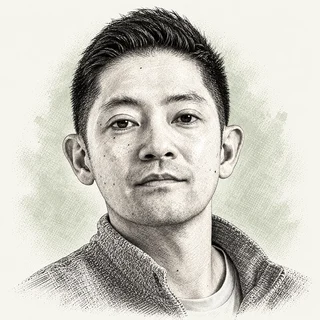
Capital efficiency needs the right denominator
According to Lee’s November 2025 company account, Lee reports $100M ARR, profitability, 50 employees and $23M initial funding, then separately announces a $68M Series B.
I would compare the milestones at their own dates. The later capital is not the amount used to reach the earlier operating milestone, and ARR is not recognized revenue. This is a useful claim to investigate, not an audited efficiency league table.
The company's account places the operating milestone before the newly announced financing. Comparing $100M ARR with the later funding total would answer a different question from the company's stated milestone with $23M initial funding. The table retains both the event and its date.
I would also keep profitability as a company claim until the supporting definition and financial records are available. A lean headcount can be a useful fact about a business, but it is not a complete measure of efficiency when infrastructure, contractors and distribution costs differ.
James Cadwallader
Co-founder and CEO
Being visible in AI answers is a business problem
According to Profound’s September announcement, the record identifies James Cadwallader and announces a $180M Series D at a $1.8B valuation.
What matters next is how marketers distinguish an observed mention from a customer actually choosing the product. A measurement tool should connect its indicators to useful business outcomes, while acknowledging that model answers change.
Noah Shinn
Paper co-author
An agent’s memory can help or mislead it
According to The Reflexion paper, Noah Shinn is the paper’s first listed author; the framework uses feedback stored as text rather than updating model weights.
The question for 2027 is whether that approach becomes a dependable ingredient in agent products. The research artifact establishes a contribution, rather than a later company-financing outcome.
Lourdes Agapito
Professor and co-founder, UCL record
Research can become a production tool
According to UCL’s Synthesia case study, UCL attributes underpinning visual-synthesis research to Lourdes Agapito’s team and describes her co-founding role.
The business question concerns the practical conversion of research into a tool businesses can use repeatedly. The economic question is how much production effort is removed while preserving consent, identity control and a useful final result.
Demi Guo
CEO and co-founder
The user needs to direct the result
According to Pika’s founders biography, Pika identifies Demi Guo as CEO and co-founder in its team material.
What matters next is how consumer-friendly creation tools turn an idea into a controllable output. The useful measure includes revision effort and repeat use, rather than generation count alone.
Mikey Shulman
Co-founder and CEO
The music business is part of the model business
According to Suno’s dated product and partnership posts, the September 2026 posts identify Mikey Shulman and describe model releases and music-industry partnerships.
What matters next is how creative control, permissions and distribution evolve together. A music model’s usefulness to customers depends on what they can do with its outputs, not only whether a generated song sounds persuasive.
Bar Winkler
CEO, company team record
Integration is part of the product cost
According to Wonderful’s company and leadership material, Wonderful identifies Bar Winkler and describes an enterprise platform supported by local deployment teams.
My focus is the economics of implementation. A model can be portable while the surrounding enterprise workflow remains highly specific; the labor needed to connect systems and manage exceptions affects margins and scalability.
Further records: Wonderful's publicly indexed team biography
Chris Pedregal
Product founder associated with dated release notes
Meeting context should survive the meeting
According to Granola’s product update record, Chris Pedregal appears as the author of releases including meeting chat, Windows support and shared team context.
The question for 2027 is whether a note-taking product becomes a dependable source of organizational memory. The value increases only if people can retrieve context accurately and manage what is recorded, retained and shared.
Where the work meets the world
Clinical workflows, biology, robots, law, finance, industry and education.
Zachary Lipton
Chief Scientific and Technology Officer
Clinical documentation has to be faithful
According to Abridge’s Lipton biography, Abridge identifies Lipton’s scientific and technology leadership and describes his work on robust machine learning.
What matters next is how documentation systems expose mistakes and support clinician review. Time savings are economically important, but I would not infer a clinical benefit from a product’s adoption or fundraising alone.
Nikhil Buduma
Co-founder and CEO
The workflow extends beyond the transcript
According to Ambience’s September 2025 appointment record, the company announces Nikhil Buduma’s move from chief scientist to CEO and describes documentation, coding and clinical workflows.
The question for 2027 is whether broader integration produces useful operational outcomes without weakening oversight. A company's deployment statement is evidence of its approach, not independent proof of improved patient outcomes.
Zachary Ziegler
Founder identified by investor record
A cited answer still needs source discipline
According to Sequoia’s Ziegler founder record, Sequoia associates Zachary Ziegler with OpenEvidence and links its clinical-information product.
The question for 2027 is whether information retrieval can remain useful while making the basis of an answer inspectable. Citations are an entry point for checking; they do not by themselves establish that the answer accurately represents the evidence.
Suchi Saria
Founder
Useful alerts must fit the care team
According to Bayesian Health’s founding account, the company identifies Suchi Saria as its founder and describes real-time clinical signals drawn from patient data.
The business question concerns the relationship between a predictive model and the people expected to act on it. An alert’s business and clinical value depend on workflow, false alarms and the intervention it enables.
Joshua Meier
Co-founder, investor account
A designed molecule must pass an experiment
According to Index Ventures’ Chai investment account, Index identifies Joshua Meier among Chai’s co-founders and describes a molecular-design business.
What matters next is how computational proposals become experimentally useful candidates. A partner announcement or prediction result does not establish a successful medicine; laboratory and development evidence must carry the next stage of the story.
Brian Hie
Researcher and Evo 2 co-senior author
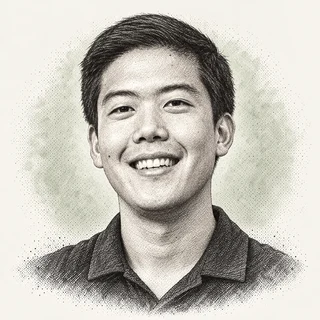
Biological prediction needs experimental grounding
According to Arc’s Evo 2 research announcement, Arc identifies Brian Hie as a co-senior author and describes releasing model code, data and weights.
I am watching whether open biological models help outside researchers ask better experimental questions. The immediate evidence is a research resource, not proof of a clinical product or a reliable simulation of every organism.
The useful documentary finding is the set of released artifacts. Arc describes sharing data, code and weights, giving outside researchers a way to investigate the work. Access is a practical research advantage, but it does not guarantee that a proposed biological design will work.
My next test is external reuse tied to experimental evidence. A model can become a valuable foundation for research while remaining far from a clinical product. I would keep prediction, laboratory validation and therapeutic development as different stages, each with its own evidence.
Max Jaderberg
President, effective January 2026

Research leadership takes on a delivery obligation
According to Isomorphic’s leadership announcement, the November 2025 record appoints Max Jaderberg President effective January 1, 2026, after serving as Chief AI Officer.
I am watching the transition from model development to a company delivering drug-design work. The milestone that matters is external validation of useful candidates and workflows, with development stages kept distinct.
The appointment has a clear effective date. That lets the article distinguish the announcement in November from the leadership change in January. Dates matter for operating milestones too: a planned study, a candidate entering development and a successful result are separate events.
I would follow the company through those events instead of infer progress from capital raised. Drug-design research can have substantial option value while its eventual commercial outcome remains uncertain. The watchlist should make the next evidence threshold easy to identify.
Emma Lundberg
Associate professor and Cell Atlas director
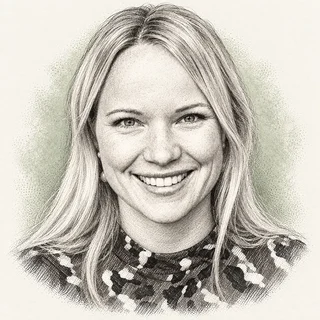
The dataset can be the scientific advantage
According to Lundberg’s Stanford research profile, Stanford describes Lundberg’s work on spatial protein organization, cell mapping and virtual-cell models.
I am watching the quality of the measurements behind biological AI. Better models cannot compensate indefinitely for poorly characterized data, and a useful virtual cell must explain which behaviors it captures and which it does not.
A virtual-cell narrative can obscure the measurements that make a model useful. Lundberg's institutional profile identifies work on where proteins are located and how that relates to cellular function. The spatial information is part of the scientific question, not a decorative label attached to a general model.
I would look for predictions that lead to new measurements and survive experimental scrutiny. The model should state its scope: a useful representation of selected processes does not become a complete simulation of a living cell merely because the interface is persuasive.
Karol Hausman
Co-founder, personal research record
General-purpose robotics needs repeatable transfer
According to Hausman’s research and founding account, Hausman identifies himself as a Physical Intelligence co-founder and lists work on robot learning and general-purpose skills.
What matters next is how much new engineering a robot needs for each deployment. Shared models could improve scalability, but the practical test includes intervention, setup and maintenance rather than a curated task video.
Deepak Pathak
Faculty researcher
Learning from the world rather than a perfect dataset
According to Pathak’s CMU research description, Pathak describes agents learning from raw sensory data and research spanning vision, learning and robotics.
The question for 2027 is whether those methods reduce dependence on expensive curated demonstrations. A robot that learns more economically still has to do useful work safely and reliably in the intended setting.
Bernt Øivind Børnich
Founder and CEO, product announcement
A household robot is a service commitment
According to 1X’s NEO launch announcement, the October 2025 company release identifies Bernt Børnich and presents NEO as a home-robot product.
I am watching what a customer can actually rely on after delivery. Hardware reliability, human assistance, privacy and maintenance all belong in the cost of providing a useful household robot.
Carolina Parada
Gemini Robotics announcement author
Embodied reasoning needs an action test
According to Parada’s Gemini Robotics announcement, the March 2025 post by Carolina Parada introduces vision-language-action and embodied-reasoning models.
What matters next is how language and visual understanding become dependable physical actions. The relevant evidence includes task success, adaptation and safety under changed conditions, rather than language fluency alone.
Max Junestrand
CEO and co-founder, 2026 event record
Legal work needs traceable context
According to Legora’s 2026 ILTACON material, Legora identifies Max Junestrand as CEO and co-founder and describes a platform for legal work.
The question for 2027 is whether legal teams can inspect and revise the steps between source material and final output. Time savings matter only alongside source fidelity, confidentiality and the professional review still required.
Gabriel Pereyra
Co-founder and President, 2024 announcement
Distribution and trust are part of the product
According to Harvey’s Azure deployment announcement, the March 2024 record identifies Gabriel Pereyra and describes deployment and distribution through Azure.
What matters next is how a specialized AI product becomes purchasable and usable within a large organization. Distribution can accelerate adoption, but the product still has to justify its place in a professional workflow.
George Sivulka
Founder and CEO, company announcement
Research is only one stage of the financial workflow
According to Sivulka’s FlashDocs acquisition account, the June 2025 post identifies Sivulka and describes adding slide creation to retrieval and analysis workflows.
My focus is the handoff from evidence to a deliverable. A financial team needs a defensible chain from source documents to analysis to presentation, and errors can enter at every stage.
Gabriel Stengel
Company financing-announcement author
The banking workflow is the unit of value
According to Stengel’s April company update, Gabe Stengel authors Rogo’s April 29, 2026 announcement of a $160M Series D.
The question for 2027 is whether financial-workflow automation reduces total review and execution effort. A company’s financing is a dated capital event; it does not establish the accuracy of its analysis or the productivity of its users.
Antoine Bordes
Chief Scientist, January 2026 record
Grounding intelligence in structured facts
According to Helsing’s research-award account, the January 2026 release identifies Bordes and describes his co-authored research on structured knowledge embeddings.
What matters next is how research translates into reliable systems under demanding operational conditions. Academic recognition establishes a contribution; deployment claims need separate evidence about testing, constraints and oversight.
Oege de Moor
Founder associated with the company’s security research
Count validated findings, not just generated exploits
According to XBOW’s account of its security-testing work, the June 2025 post says automated findings were reviewed by its security team before submission under platform rules.
For Oege de Moor’s story, that human-review step is economically important. I am watching how useful discovery, false positives and responsible reporting combine, rather than treating a leaderboard headline as fully unattended operation.
Further records: Sequoia's interview with Oege de Moor
Ekin Dogus Cubuk
Co-founder, company launch record
Materials research needs a physical feedback loop
According to Periodic’s launch account, the company describes its founding team and a plan to combine AI with autonomous physical laboratories.
For Ekin Dogus Cubuk, I am watching whether the loop produces reproducible materials results. The company’s financing is recorded once alongside Fedus; a shared company event does not become two independent pieces of funding evidence.
Jonathan Godwin
Chief Executive Officer
A named industrial deployment is a concrete lead
According to Orbital’s BASF ECMS agreement announcement, the August 2026 post names Jonathan Godwin and describes licensing its CurieOS materials platform to BASF ECMS.
I would follow that relationship into evidence of actual industrial use. A named agreement is more specific than a general market claim, but it does not disclose realized revenue or independent proof of improved research productivity.
Kristen DiCerbo
Chief Learning Officer
Start with the learning problem
According to Khan Academy’s discussion of DiCerbo’s learning approach, the organization identifies DiCerbo and describes her advice to begin technology decisions with the problem being solved.
The question for 2027 is whether AI tools improve learning outcomes rather than simply usage. Education requires a clear account of the teacher’s role, the student’s needs and what the evaluation actually measures.
Alex Kendall
Co-founder and CEO
Driving intelligence needs evidence on the road
According to Kendall’s research and company page, Kendall identifies his Wayve role and lists work on embodied AI, uncertainty and autonomous-driving models.
The business question concerns the progression from research to dependable deployment. The economics depend on the operating conditions, supervision and service required, which cannot be established by a capable-looking driving clip.
Who sets the tests and shapes the decisions
Evaluation, governance, investing and public explanation have different mechanisms of influence.
Beth Barnes
Founder and CEO
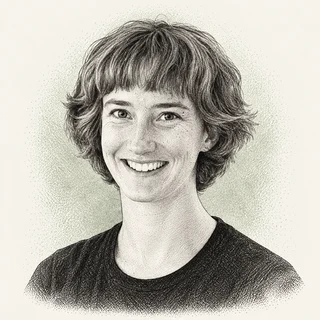
Capability and useful productivity are different measures
According to METR’s leadership and research description, METR names Beth Barnes as founder and CEO and describes independent evaluation, productivity research and its funding arrangements.
I am watching evidence that can change a deployment or investment decision. The organization's time-horizon work measures a particular task distribution; its old chart page explicitly no longer updates, so I do not extrapolate it into 2027.
The organization discloses both funding and access relationships. Its about page says it has not accepted AI-company funding, while acknowledging tokens and access supplied by model developers. Those are different kinds of support, and readers deserve to see the distinction.
I would separate capability evaluations from studies of useful productivity. The historical time-horizon metric uses human-expert task duration in a specified suite, not the time a model can remain at work unattended. Its old page says it no longer updates; a forecast needs a current dataset and clearly stated assumptions.
Marius Hobbhahn
CEO and co-founder
An evaluator needs more than a dramatic example
According to Apollo’s team and research description, Apollo identifies Marius Hobbhahn as CEO and co-founder and describes research on AI scheming.
The business question concerns the path from a concerning behavior in an experiment to a useful evaluation or safeguard. The business relevance depends on repeatability, realistic conditions and a clear account of what the test detects.
Buck Shlegeris
Chief Executive Officer
Design for a model that may not cooperate
According to Redwood’s leadership record, Redwood identifies Buck Shlegeris as Chief Executive Officer of the AI safety and security research nonprofit.
I am watching control methods that test whether oversight can remain useful even when a system behaves unexpectedly. The practical question is what they detect, what they miss and how much capability they sacrifice.
Owain Evans
Research-team lead
A narrow change can have a broader consequence
According to Truthful AI’s research and team page, the nonprofit identifies Owain Evans as team lead and lists research on deception, hidden reasoning and emergent misalignment.
The question for 2027 is whether training changes produce unintended behavior beyond the targeted task. That matters to buyers who adapt a model for a narrow use and assume the rest of its behavior remains unchanged.
Dean W. Ball
Head of Strategic Futures, announced July 2026
Policy work changes commercial constraints
According to FAI’s Ball appointment account, FAI says Ball joins OpenAI as Head of Strategic Futures on July 6 while retaining a non-resident fellowship.
I am watching where policy arguments become concrete operating rules. His move also changes the institutional perspective behind those arguments, which readers should distinguish from independent academic or public-interest analysis.
Lennart Heim
Training-compute paper co-author
A threshold is an initial filter, not the whole risk assessment
According to Heim and Koessler’s compute-threshold paper, the authors argue that training compute can identify models for scrutiny but should not determine mitigations by itself.
What matters next is how resource-based policy adapts when algorithms and inference change. A measurable input can be useful while remaining an imperfect proxy for capability or harm.
Kai Zenner
Digital policy adviser, OECD biography
Implementation can matter more than the headline law
According to OECD’s Zenner biography, OECD describes Zenner’s digital-policy work for MEP Axel Voss and links his work on foundation-model regulation.
What matters next is how technical distinctions enter implementation and oversight. Companies need to know what actually applies to their systems; a historical biography’s negotiation language should not be mistaken for the current legal timetable.
Helen Toner
Executive Director
Policy research needs a documented chain of reasoning
According to CSET’s current Toner biography, CSET identifies Toner as Executive Director.
I am watching evidence about AI competition and governance that can survive inspection beyond its headline. The value lies in transparent sources and distinctions, especially where technical and geopolitical claims interact.
Sarah Guo
Founder and investment-thesis author
The investment thesis should survive the market cycle
According to Guo’s account of launching Conviction, Guo describes an AI-focused venture firm built around companies using foundation models.
I am watching which investments produce durable businesses rather than brief distribution advantages. A fund’s commitments are managed capital, not the investor’s personal wealth or proof of returns.
Nathan Benaich
Solo member of investment staff
Make predictions inspectable, then score them
According to Benaich’s State of AI report introduction, Benaich describes annual predictions and returning to assess them in the State of AI report.
I am watching that accountability as much as the predictions themselves. An investor’s research can be useful while reflecting an investment perspective; readers should be able to distinguish evidence, selection and the author’s bets.
Further records: Air Street's investment staff record
Leigh Marie Braswell
Partner
Product experience meets capital allocation
According to Kleiner Perkins’ Braswell biography, the firm identifies Braswell as a partner and describes earlier engineering and product work at Scale AI.
What matters next is how that experience shapes judgments about infrastructure and applications. A named investment or board seat establishes a relationship, but it does not establish the investor’s personal stake or a realized return.
Grace Isford
Partner
The physical-world bet has a different delivery schedule
According to Lux’s Isford biography, Lux identifies Isford as a partner investing across software, computation and the physical world.
The question for 2027 is whether investment horizons match the work needed to deliver hardware, robotics or biology. Those businesses can have different validation and capital requirements from a software product, even when all use AI.
Simon Willison
Datasette creator and Django co-creator

Test the tool before accepting the claim
According to Willison’s account of his work, Willison identifies his open-source development work, Datasette and Django, and discloses sponsorship and product-preview relationships.
I am watching his practical approach to checking AI tools because buyers need reproducible examples and visible failure cases. Commercial access can inform useful testing while still requiring clear disclosure of the relationship.
His biography includes sponsorship and preview-access disclosures alongside the work itself. That is useful context for assessing a product test. A person can report valuable observations while having early access; the relationship should be visible rather than collapsed into a blanket independence claim.
The practical standard I would use is reproduction. Can a reader run the example, see the failure mode and identify the setup that produced it? That form of technical literacy can lower costly mistakes for businesses adopting tools faster than they understand their constraints.
Further records: Willison's prompt-injection account
Nathan Lambert
Researcher and author; departed Ai2 in 2026
Open weights are not an open training recipe
According to Lambert’s departure and research account, Lambert describes his work on Tülu and open post-training and says he is developing a new project after leaving Ai2.
The business question concerns the information needed to reproduce how a model was improved. A released checkpoint is useful, but it does not reveal every ingredient in the training process. The departure account does not name the new organization, so I would not infer a current employer from it.
Dwarkesh Patel
Host
Interviews are evidence of what someone says
According to Patel’s podcast description, Patel identifies himself as the podcast’s host and describes a format built around researched interviews.
My focus is the questions that expose assumptions about cost, capability and strategy. A first-person interview can establish a speaker’s view; it does not independently verify every forecast or private-company number stated in it.
Shawn "swyx" Wang
Co-founder and CEO
The people applying models need a shared vocabulary
According to AI Engineer’s history and leadership page, the organization identifies Shawn Wang and dates his AI Engineer essay and the first summit to 2023.
What matters next is how a professional community turns fast-moving tools into repeatable practice. Conferences and newsletters can accelerate learning, but attendance or audience size does not establish engineering quality.
Sebastian Raschka
LLM research engineer and author
Implementation exposes what a diagram leaves out
According to Raschka’s account of his research practice, Raschka describes reading papers and reference implementations, then building smaller versions to understand their details.
I am watching that bridge between research and working code. It can help readers judge architecture and evaluation choices for themselves, rather than rely on a summary that hides important assumptions.
Further records: Raschka's LLM implementation repository
Who am I missing?
A researcher, builder or voice doing work I should investigate. Tell me who, and point me to something I can verify.
I review nominations independently. A suggestion does not guarantee inclusion, and this is not a paid placement list.
Follow the money, with definitions.
Selected events supporting this feature, not an exhaustive funding history. Each company event appears once even when several people share it. All amounts below are USD.
| Company / date | Event / amount | Valuation basis | What the record establishes |
|---|---|---|---|
| Periodic Labs | $300Mfounding | Not statedunknown | One company event shared by two watchlist entries. Original record ↗ |
| Inferact | $150Mseed | $800Munspecified | The disclosed valuation does not specify pre/post basis. Original record ↗ |
| RadixArk | $100Mseed | $400M post-moneypost-money | Accel-led, Spark Capital co-led. Original record ↗ |
| Isomorphic Labs | $600Mfinancing | Not statedunknown | The first external round; not a founder's personal holding value. Original record ↗ |
| Gamma | $68M Series Bfinancing | $2.1Bunspecified | New round separate from the stated $23M initial funding milestone. Original record ↗ |
| Braintrust | $80M Series Bfinancing | Not stated in this recordunknown | Company announcement, led by ICONIQ. Original record ↗ |
| Factory | $150M Series Cfinancing | $1.5Bunspecified | Preserved separately from September's later financing. Original record ↗ |
| Factory | $200M financingfinancing | $5Bunspecified | A subsequent company event, not a revised observation of the April round. Original record ↗ |
| Profound | $180M Series Dfinancing | $1.8Bunspecified | Co-led by Sequoia Capital and Kleiner Perkins. Original record ↗ |
| Fireworks | $1.505B Series Dfinancing | $17.5Bunspecified | Capital raised is separate from the reported annualized revenue run rate. Original record ↗ |
| Rogo | $160M Series Dfinancing | Not stated in the opened recordunknown | No valuation inferred from the round amount. Original record ↗ |
| Clay | Up to $55M employee share salestender | $5B tender valuationtransaction | Sale capacity, not new capital into the company. Excluded from financing chart. Original record ↗ |
| Base44 | About $80M initial considerationacquisition | Not a financing valuationtransaction | Includes about $25M retention payments; conditional earn-outs through 2029. Not personal proceeds. Original record ↗ |
Three documented founding and seed financings
Selected watchlist companies · USD millions · Sep 2025–May 2026
Scroll horizontally to see every column. Keyboard: focus the chart and use the arrow keys.
Zero baseline. Missing values are not interpolated.
A comparison across companies, not a time series or personal-wealth chart. Acquisition consideration, tenders and unknown amounts are excluded. Exact event dates and valuation bases remain in the table above.
Read the sequence, not just the headline.
Selected disclosures across different organizations. These are discrete records, not a growth curve or evidence of an industry-wide trend.
- Acquisition terms
Base44
In Wix’s Base44 acquisition terms, initial consideration and conditional future payments are described separately.
- Founding financing
Periodic Labs
In a16z’s Periodic Labs investment announcement, the investor announces the founding round; the scientific outcome remains a separate test.
- Leadership announcement
Isomorphic Labs
In Isomorphic’s leadership announcement, jaderberg’s appointment is announced with an effective date of January 1, 2026.
- Team announcement
ggml / Hugging Face
In The ggml team’s Hugging Face announcement, joining the company comes with a stated commitment to technical and community autonomy.
- Series C
Factory
In Factory April Series C, the earlier financing is retained as its own dated company event.
- Subsequent financing
Factory
In Factory’s September financing announcement, a later round follows the Series C; it does not replace the earlier event.
- Model announcement
Reflection
In Reflection’s Beam announcement, supporting artifacts are promised later; the announcement alone does not establish their release.
How I built this watchlist.
Portraits of the 12 featured people are AI-generated editorial illustrations, based on public identity references. They are not photographs or evidence of an interview or endorsement. The short role labels describe contribution categories; the role line below each name preserves the scope of its dated record.
I conducted independent desk research into the public records linked here: contribution credits, papers, project documentation, institutional biographies and company or investor announcements. The research focused on the concise claims retained in this feature. It was not an interview project, a comprehensive archive search or an independent audit of company finances.
The selection is editorial. I looked for an identifiable contribution, a consequential technical or business question and an observable next test. People can belong to a research team without being solely responsible for its results. Where current employment was not established, I use a historical contribution record and label it accordingly. A company or self-authored biography is an attributed statement; reading it does not make every associated claim independently verified.
Company value, money raised, employee share sales, acquisition consideration, operating run rates and personal wealth are different measures. The financial tables preserve their dates and definitions. I deduplicate company events, keep unavailable amounts unknown and exclude tenders and acquisitions from the financing chart. I do not infer personal stakes or net worth from a company valuation.
The 2027 tests and countercases are my analysis. They are not promises, probability estimates, investment recommendations or an influence ranking. This roster is not a representative sample from which to infer industry demographics. The diagrams represent our editorial grouping, not measured relationships between people.
Research checked through . A later release, role change, financing or credible contrary record can change an entry. Send a specific claim and its supporting record to daniel@visionarytalks.com; our corrections process explains how updates are reviewed.
Open the source ledger (108 records)
- Wei’s research pagealexwei.org · Accessed 2026-10-13. Company/investor and self-authored statements are attributed, not independently audited; dated historical records do not establish subsequent employment.
- OpenAI’s o1 contribution recordopenai.com · Accessed 2026-10-13. Company/investor and self-authored statements are attributed, not independently audited; dated historical records do not establish subsequent employment.
- Wei’s own research pagejasonwei.net · Accessed 2026-10-13. Company/investor and self-authored statements are attributed, not independently audited; dated historical records do not establish subsequent employment.
- Douglas and Bricken’s Claude discussiondwarkesh.com · Accessed 2026-10-13. Company/investor and self-authored statements are attributed, not independently audited; dated historical records do not establish subsequent employment.
- The attribution-graphs research recordtransformer-circuits.pub · Accessed 2026-10-13. Company/investor and self-authored statements are attributed, not independently audited; dated historical records do not establish subsequent employment.
- Schrittwieser’s AlphaProof accountjulian.ac · Accessed 2026-10-13. Company/investor and self-authored statements are attributed, not independently audited; dated historical records do not establish subsequent employment.
- Nanda’s account of his workneelnanda.io · Accessed 2026-10-13. Company/investor and self-authored statements are attributed, not independently audited; dated historical records do not establish subsequent employment.
- Parker-Holder’s research pagejparkerholder.github.io · Accessed 2026-10-13. Company/investor and self-authored statements are attributed, not independently audited; dated historical records do not establish subsequent employment.
- Weng’s dated research noteslilianweng.github.io · Accessed 2026-10-13. Company/investor and self-authored statements are attributed, not independently audited; dated historical records do not establish subsequent employment.
- a16z’s Periodic Labs investment announcementa16z.com · Accessed 2026-10-13. Company/investor and self-authored statements are attributed, not independently audited; dated historical records do not establish subsequent employment.
- Reflection’s Beam announcementreflection.ai · Accessed 2026-10-13. Company/investor and self-authored statements are attributed, not independently audited; dated historical records do not establish subsequent employment.
- The MiMo-V2-Flash technical reportarxiv.org · Accessed 2026-10-13. Company/investor and self-authored statements are attributed, not independently audited; dated historical records do not establish subsequent employment.
- The Reflexion paperarxiv.org · Accessed 2026-10-13. Company/investor and self-authored statements are attributed, not independently audited; dated historical records do not establish subsequent employment.
- The Qwen2 technical reportarxiv.org · Accessed 2026-10-13. Company/investor and self-authored statements are attributed, not independently audited; dated historical records do not establish subsequent employment.
- The Kimi K2 technical reportarxiv.org · Accessed 2026-10-13. Company/investor and self-authored statements are attributed, not independently audited; dated historical records do not establish subsequent employment.
- Finn’s Stanford pageai.stanford.edu · Accessed 2026-10-13. Company/investor and self-authored statements are attributed, not independently audited; dated historical records do not establish subsequent employment.
- Yang’s research pagesherryy.github.io · Accessed 2026-10-13. Company/investor and self-authored statements are attributed, not independently audited; dated historical records do not establish subsequent employment.
- OpenAI’s account of the mathematical workopenai.com · Accessed 2026-10-13. Company/investor and self-authored statements are attributed, not independently audited; dated historical records do not establish subsequent employment.
- Hooker’s Hardware Lottery essayarxiv.org · Accessed 2026-10-13. Company/investor and self-authored statements are attributed, not independently audited; dated historical records do not establish subsequent employment.
- Cohere’s executive-team pagecohere.com · Accessed 2026-10-13. Company/investor and self-authored statements are attributed, not independently audited; dated historical records do not establish subsequent employment.
- Inferact’s launch announcementinferact.ai · Accessed 2026-10-13. Company/investor and self-authored statements are attributed, not independently audited; dated historical records do not establish subsequent employment.
- AMD’s 2026 speaker biographyamd.com · Accessed 2026-10-13. Role read in AMD's publicly indexed 2026 event biography. The current fetched event page omits the speaker block; the entry labels an event-time title, not a independently confirmed October role.
- The ggml team’s Hugging Face announcementhuggingface.co · Accessed 2026-10-13. Company/investor and self-authored statements are attributed, not independently audited; dated historical records do not establish subsequent employment.
- The official FlashAttention implementationgithub.com · Accessed 2026-10-13. Company/investor and self-authored statements are attributed, not independently audited; dated historical records do not establish subsequent employment.
- Y Combinator’s Unsloth recordycombinator.com · Accessed 2026-10-13. Company/investor and self-authored statements are attributed, not independently audited; dated historical records do not establish subsequent employment.
- MIT’s faculty recordeecs.mit.edu · Accessed 2026-10-13. Company/investor and self-authored statements are attributed, not independently audited; dated historical records do not establish subsequent employment.
- The Transformers v5 announcementhuggingface.co · Accessed 2026-10-13. Company/investor and self-authored statements are attributed, not independently audited; dated historical records do not establish subsequent employment.
- Bernhardsson’s own biographyerikbern.com · Accessed 2026-10-13. Company/investor and self-authored statements are attributed, not independently audited; dated historical records do not establish subsequent employment.
- Fireworks’ investor-hosted July announcementotpp.com · Accessed 2026-10-13. Company/investor and self-authored statements are attributed, not independently audited; dated historical records do not establish subsequent employment.
- Baseten’s team and engineering pagebaseten.co · Accessed 2026-10-13. Company/investor and self-authored statements are attributed, not independently audited; dated historical records do not establish subsequent employment.
- fal’s company historyfal.ai · Accessed 2026-10-13. Company/investor and self-authored statements are attributed, not independently audited; dated historical records do not establish subsequent employment.
- Y Combinator’s Ollama recordycombinator.com · Accessed 2026-10-13. Company/investor and self-authored statements are attributed, not independently audited; dated historical records do not establish subsequent employment.
- Eskildsen’s own biographysirupsen.com · Accessed 2026-10-13. Company/investor and self-authored statements are attributed, not independently audited; dated historical records do not establish subsequent employment.
- Goyal’s Series B announcementbraintrust.dev · Accessed 2026-10-13. Company/investor and self-authored statements are attributed, not independently audited; dated historical records do not establish subsequent employment.
- Angelopoulos’s research pageangelopoulos.ai · Accessed 2026-10-13. Company/investor and self-authored statements are attributed, not independently audited; dated historical records do not establish subsequent employment.
- MCP’s October maintainer recordgithub.com · Accessed 2026-10-13. Company/investor and self-authored statements are attributed, not independently audited; dated historical records do not establish subsequent employment.
- Etched’s leadership pageetched.com · Accessed 2026-10-13. Company/investor and self-authored statements are attributed, not independently audited; dated historical records do not establish subsequent employment.
- MatX’s team and technical descriptionmatx.com · Accessed 2026-10-13. Company/investor and self-authored statements are attributed, not independently audited; dated historical records do not establish subsequent employment.
- KPMG’s LlamaIndex investment announcementkpmg.com · Accessed 2026-10-13. Company/investor and self-authored statements are attributed, not independently audited; dated historical records do not establish subsequent employment.
- KTH’s 2025 innovation-award accountkth.se · Accessed 2026-10-13. Company/investor and self-authored statements are attributed, not independently audited; dated historical records do not establish subsequent employment.
- Wix’s Base44 acquisition termswix.com · Accessed 2026-10-13. Company/investor and self-authored statements are attributed, not independently audited; dated historical records do not establish subsequent employment.
- Staniszewski’s May company updateelevenlabs.io · Accessed 2026-10-13. Company/investor and self-authored statements are attributed, not independently audited; dated historical records do not establish subsequent employment.
- Mercor’s mission and leadership statementmercor.com · Accessed 2026-10-13. Company/investor and self-authored statements are attributed, not independently audited; dated historical records do not establish subsequent employment.
- Decagon’s company and founders pagedecagon.ai · Accessed 2026-10-13. Company/investor and self-authored statements are attributed, not independently audited; dated historical records do not establish subsequent employment.
- Factory’s September financing announcementfactory.com · Accessed 2026-10-13. Company/investor and self-authored statements are attributed, not independently audited; dated historical records do not establish subsequent employment.
- Emergent’s Wingman launch accountemergent.sh · Accessed 2026-10-13. Company/investor and self-authored statements are attributed, not independently audited; dated historical records do not establish subsequent employment.
- Runway’s 2026 summit recordsummit.runway.com · Accessed 2026-10-13. Company/investor and self-authored statements are attributed, not independently audited; dated historical records do not establish subsequent employment.
- Clay’s January tender announcementclay.com · Accessed 2026-10-13. Company/investor and self-authored statements are attributed, not independently audited; dated historical records do not establish subsequent employment.
- n8n’s official company recordn8n.io · Accessed 2026-10-13. Company/investor and self-authored statements are attributed, not independently audited; dated historical records do not establish subsequent employment.
- Stanford’s Rombach speaker biographyee.stanford.edu · Accessed 2026-10-13. Company/investor and self-authored statements are attributed, not independently audited; dated historical records do not establish subsequent employment.
- SaaStr’s Mashrabov speaker recordsaastrannual.com · Accessed 2026-10-13. Company/investor and self-authored statements are attributed, not independently audited; dated historical records do not establish subsequent employment.
- Lee’s November 2025 company accountgamma.app · Accessed 2026-10-13. Company/investor and self-authored statements are attributed, not independently audited; dated historical records do not establish subsequent employment.
- Profound’s September announcementtryprofound.com · Accessed 2026-10-13. Company/investor and self-authored statements are attributed, not independently audited; dated historical records do not establish subsequent employment.
- UCL’s Synthesia case studyucl.ac.uk · Accessed 2026-10-13. Company/investor and self-authored statements are attributed, not independently audited; dated historical records do not establish subsequent employment.
- Pika’s founders biographypika.art · Accessed 2026-10-13. Company/investor and self-authored statements are attributed, not independently audited; dated historical records do not establish subsequent employment.
- Suno’s dated product and partnership postssuno.com · Accessed 2026-10-13. Company/investor and self-authored statements are attributed, not independently audited; dated historical records do not establish subsequent employment.
- Wonderful’s company and leadership materialwonderful.ai · Accessed 2026-10-13. Company/investor and self-authored statements are attributed, not independently audited; dated historical records do not establish subsequent employment.
- Granola’s product update recordgranola.ai · Accessed 2026-10-13. Company/investor and self-authored statements are attributed, not independently audited; dated historical records do not establish subsequent employment.
- Abridge’s Lipton biographyabridge.com · Accessed 2026-10-13. Company/investor and self-authored statements are attributed, not independently audited; dated historical records do not establish subsequent employment.
- Ambience’s September 2025 appointment recordambiencehealthcare.com · Accessed 2026-10-13. Company/investor and self-authored statements are attributed, not independently audited; dated historical records do not establish subsequent employment.
- Sequoia’s Ziegler founder recordsequoiacap.com · Accessed 2026-10-13. Company/investor and self-authored statements are attributed, not independently audited; dated historical records do not establish subsequent employment.
- Bayesian Health’s founding accountbayesianhealth.com · Accessed 2026-10-13. Company/investor and self-authored statements are attributed, not independently audited; dated historical records do not establish subsequent employment.
- Index Ventures’ Chai investment accountindexventures.com · Accessed 2026-10-13. Company/investor and self-authored statements are attributed, not independently audited; dated historical records do not establish subsequent employment.
- Arc’s Evo 2 research announcementarcinstitute.org · Accessed 2026-10-13. Company/investor and self-authored statements are attributed, not independently audited; dated historical records do not establish subsequent employment.
- Isomorphic’s leadership announcementisomorphiclabs.com · Accessed 2026-10-13. Company/investor and self-authored statements are attributed, not independently audited; dated historical records do not establish subsequent employment.
- Lundberg’s Stanford research profileprofiles.stanford.edu · Accessed 2026-10-13. Company/investor and self-authored statements are attributed, not independently audited; dated historical records do not establish subsequent employment.
- Hausman’s research and founding accountkarolhausman.github.io · Accessed 2026-10-13. Company/investor and self-authored statements are attributed, not independently audited; dated historical records do not establish subsequent employment.
- Pathak’s CMU research descriptionri.cmu.edu · Accessed 2026-10-13. Company/investor and self-authored statements are attributed, not independently audited; dated historical records do not establish subsequent employment.
- 1X’s NEO launch announcementbusinesswire.com · Accessed 2026-10-13. Company/investor and self-authored statements are attributed, not independently audited; dated historical records do not establish subsequent employment.
- Parada’s Gemini Robotics announcementdeepmind.google · Accessed 2026-10-13. Company/investor and self-authored statements are attributed, not independently audited; dated historical records do not establish subsequent employment.
- Legora’s 2026 ILTACON materiallegora.com · Accessed 2026-10-13. Company/investor and self-authored statements are attributed, not independently audited; dated historical records do not establish subsequent employment.
- Harvey’s Azure deployment announcementharvey.ai · Accessed 2026-10-13. Company/investor and self-authored statements are attributed, not independently audited; dated historical records do not establish subsequent employment.
- Sivulka’s FlashDocs acquisition accounthebbia.com · Accessed 2026-10-13. Company/investor and self-authored statements are attributed, not independently audited; dated historical records do not establish subsequent employment.
- Stengel’s April company updaterogo.com · Accessed 2026-10-13. Company/investor and self-authored statements are attributed, not independently audited; dated historical records do not establish subsequent employment.
- Helsing’s research-award accounthelsing.ai · Accessed 2026-10-13. Company/investor and self-authored statements are attributed, not independently audited; dated historical records do not establish subsequent employment.
- XBOW’s account of its security-testing workxbow.com · Accessed 2026-10-13. Company/investor and self-authored statements are attributed, not independently audited; dated historical records do not establish subsequent employment.
- Periodic’s launch accountperiodic.com · Accessed 2026-10-13. Company/investor and self-authored statements are attributed, not independently audited; dated historical records do not establish subsequent employment.
- Orbital’s BASF ECMS agreement announcementorbitalindustries.com · Accessed 2026-10-13. Company/investor and self-authored statements are attributed, not independently audited; dated historical records do not establish subsequent employment.
- Khan Academy’s discussion of DiCerbo’s learning approachblog.khanacademy.org · Accessed 2026-10-13. Company/investor and self-authored statements are attributed, not independently audited; dated historical records do not establish subsequent employment.
- Kendall’s research and company pagealexgkendall.com · Accessed 2026-10-13. Company/investor and self-authored statements are attributed, not independently audited; dated historical records do not establish subsequent employment.
- METR’s leadership and research descriptionmetr.org · Accessed 2026-10-13. Company/investor and self-authored statements are attributed, not independently audited; dated historical records do not establish subsequent employment.
- Apollo’s team and research descriptionapolloresearch.ai · Accessed 2026-10-13. Company/investor and self-authored statements are attributed, not independently audited; dated historical records do not establish subsequent employment.
- Redwood’s leadership recordredwoodresearch.org · Accessed 2026-10-13. Company/investor and self-authored statements are attributed, not independently audited; dated historical records do not establish subsequent employment.
- Truthful AI’s research and team pagetruthful.ai · Accessed 2026-10-13. Company/investor and self-authored statements are attributed, not independently audited; dated historical records do not establish subsequent employment.
- FAI’s Ball appointment accountthefai.org · Accessed 2026-10-13. Company/investor and self-authored statements are attributed, not independently audited; dated historical records do not establish subsequent employment.
- Heim and Koessler’s compute-threshold paperheim.xyz · Accessed 2026-10-13. Company/investor and self-authored statements are attributed, not independently audited; dated historical records do not establish subsequent employment.
- OECD’s Zenner biographyoecd.ai · Accessed 2026-10-13. Company/investor and self-authored statements are attributed, not independently audited; dated historical records do not establish subsequent employment.
- CSET’s current Toner biographycset.georgetown.edu · Accessed 2026-10-13. Company/investor and self-authored statements are attributed, not independently audited; dated historical records do not establish subsequent employment.
- Guo’s account of launching Convictionconviction.com · Accessed 2026-10-13. Company/investor and self-authored statements are attributed, not independently audited; dated historical records do not establish subsequent employment.
- Benaich’s State of AI report introductionstateof.ai · Accessed 2026-10-13. Company/investor and self-authored statements are attributed, not independently audited; dated historical records do not establish subsequent employment.
- Kleiner Perkins’ Braswell biographykleinerperkins.com · Accessed 2026-10-13. Company/investor and self-authored statements are attributed, not independently audited; dated historical records do not establish subsequent employment.
- Lux’s Isford biographyluxcapital.com · Accessed 2026-10-13. Company/investor and self-authored statements are attributed, not independently audited; dated historical records do not establish subsequent employment.
- Willison’s account of his worksimonwillison.net · Accessed 2026-10-13. Company/investor and self-authored statements are attributed, not independently audited; dated historical records do not establish subsequent employment.
- Lambert’s departure and research accountinterconnects.ai · Accessed 2026-10-13. Company/investor and self-authored statements are attributed, not independently audited; dated historical records do not establish subsequent employment.
- Patel’s podcast descriptiondwarkesh.com · Accessed 2026-10-13. Company/investor and self-authored statements are attributed, not independently audited; dated historical records do not establish subsequent employment.
- AI Engineer’s history and leadership pageai.engineer · Accessed 2026-10-13. Company/investor and self-authored statements are attributed, not independently audited; dated historical records do not establish subsequent employment.
- Raschka’s account of his research practicesebastianraschka.com · Accessed 2026-10-13. Company/investor and self-authored statements are attributed, not independently audited; dated historical records do not establish subsequent employment.
- NVIDIA's coalition announcementnvidianews.nvidia.com · Accessed 2026-10-13. Company/investor and self-authored statements are attributed, not independently audited; dated historical records do not establish subsequent employment.
- RadixArk's seed announcementradixark.com · Accessed 2026-10-13. Company/investor and self-authored statements are attributed, not independently audited; dated historical records do not establish subsequent employment.
- Tri Dao's current research pagetridao.me · Accessed 2026-10-13. Company/investor and self-authored statements are attributed, not independently audited; dated historical records do not establish subsequent employment.
- DSPy official repositorygithub.com · Accessed 2026-10-13. Company/investor and self-authored statements are attributed, not independently audited; dated historical records do not establish subsequent employment.
- Wonderful's publicly indexed team biographywonderful.ai · Accessed 2026-10-13. Company/investor and self-authored statements are attributed, not independently audited; dated historical records do not establish subsequent employment.
- Sequoia's interview with Oege de Moorsequoiacap.com · Accessed 2026-10-13. Company/investor and self-authored statements are attributed, not independently audited; dated historical records do not establish subsequent employment.
- Air Street's investment staff recordairstreet.com · Accessed 2026-10-13. Company/investor and self-authored statements are attributed, not independently audited; dated historical records do not establish subsequent employment.
- Willison's prompt-injection accountsimonwillison.net · Accessed 2026-10-13. Company/investor and self-authored statements are attributed, not independently audited; dated historical records do not establish subsequent employment.
- Raschka's LLM implementation repositorygithub.com · Accessed 2026-10-13. Company/investor and self-authored statements are attributed, not independently audited; dated historical records do not establish subsequent employment.
- Isomorphic first external investmentisomorphiclabs.com · Accessed 2026-10-13. Company/investor and self-authored statements are attributed, not independently audited; dated historical records do not establish subsequent employment.
- Factory April Series Cfactory.com · Accessed 2026-10-13. Company/investor and self-authored statements are attributed, not independently audited; dated historical records do not establish subsequent employment.
Rebuilt the supplied roster around retained, source-linked contributions; separated company transactions and operating measures; removed unsupported wealth, education and current-role assertions. This edition awaits editorial publication approval.